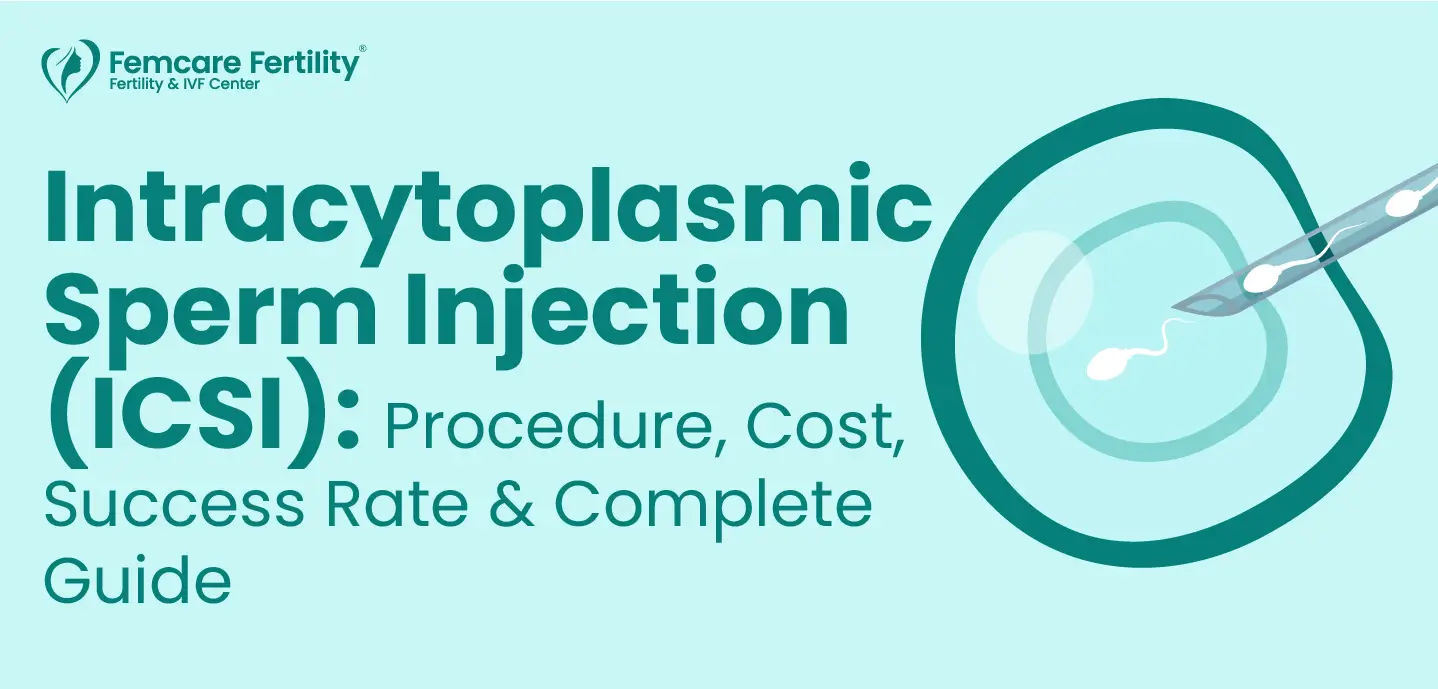
The cases of infertility among couples all over the world are increasing day by day, and the application of assisted reproductive technology has revolutionised the methods used for treating infertility problems. The most modern and effective technique used to treat such infertility is called Intracytoplasmic Sperm Injection (ICSI).
Intracytoplasmic Sperm Injection is an In Vitro Fertilisation procedure designed to aid a couple to conceive, during which one sperm cell is inserted into a mature egg to facilitate conception.
In the article below, you will learn what intracytoplasmic sperm injection is, what the intracytoplasmic sperm injection process is, the intracytoplasmic sperm injection cost, success rate, risks, benefits, and the situations when you need ICSI treatment.
What is Intracytoplasmic Sperm Injection (ICSI)?
Intracytoplasmic Sperm Injection (ICSI) is an advanced reproductive technique used during the course of In Vitro Fertilisation (IVF). Using a powerful microscope, a sperm cell is injected directly into the cytoplasm of an egg by a reproductive specialist.
In contrast to a regular IVF, during which fertilisation takes place naturally inside a laboratory petri dish, ICSI allows one to overcome any obstacles to a successful fertilisation process, especially in cases of problems with sperm cells.
At present, Intracytoplasmic Sperm Injection is considered one of the most popular ways to solve fertility issues worldwide due to the high effectiveness and efficiency of the treatment.
Why is ICSI Performed?
Intracytoplasmic Sperm Injection is recommended in cases of low chance of natural fertilisation due to problems with sperm or prior unsuccessful IVF attempts.
ICSI treatment is usually considered if one suffers from:
- Sperm count lower than normal
- Decreased sperm mobility
- Defective sperm morphology
- No presence of sperm at ejaculation because of a blockage
- Past failure of fertilisation during IVF treatment
- Storage of sperm samples
- Surgical retrieval of sperm
- Unexplained infertility
- Advanced maternal age in some cases
With intracytoplasmic Sperm Injection, by means of direct injection of sperm into eggs, higher chances of fertilization can be achieved even with poor-quality sperm samples.
Who Should Consider ICSI Treatment?
In case of infertility issues that hinder natural conception, Intracytoplasmic Sperm Injection treatment may be recommended to you.
- Male Patients with Extreme Male Infertility – Male patients with very low sperm count or sperm motility are excellent candidates for ICSI.
- Cases of Failed IVF Cycles – Where fertilisation does not take place during an earlier IVF cycle, intracytoplasmic sperm injection is a good solution.
- Men Undergoing Testicular Sperm Extraction – Men undergoing procedures such as
- Testicular sperm aspiration (TESA)
- Percutaneous epididymal sperm aspiration (PESA)
usually need the intracytoplasmic sperm injection procedure.
- Fertilisation Using Frozen Eggs or Sperm Cases – When frozen sperm or eggs cannot fertilise, the best approach is to use ICSI.
- Unexplained Infertility Case – ICSI may prove to be better than conventional IVF approaches if it is an unexplained infertility case.
How to Prepare for ICSI Treatment
Planning is necessary for Intracytoplasmic Sperm Injection treatment to increase the chances of conception.
- Fertility Assessment – Couples will have to undergo a series of tests, such as:
- Hormone testing
- Ultrasonography
- Seminal analysis
- Tests for infections
- Test for ovarian reserve
- Adopting healthy Lifestyle Choices – Doctors suggest that couples:
- Avoid drinking alcohol and smoking
- Maintain a healthy body weight
- Do regular exercises
- Have quality sleep
- Stay calm and avoid stress
- Nutritious Diet Advice – Patients should eat a balanced diet rich in:
- Antioxidants
- Proteins
- Folic acid
- Omega-3 fatty acids
- Various vitamins and minerals
- Medicines – Women are prescribed certain hormones that will result in ovulation and the production of multiple eggs.
Intracytoplasmic Sperm Injection Procedure Step by Step
The Intracytoplasmic Sperm Injection involves several procedures, as detailed below.
Step 1 – Ovarian Stimulation
Ovarian stimulation, in which the use of fertility medications is involved. In the normal menstrual cycle, a woman produces only one egg. If a couple undergoes IVF or ICSI, doctors make sure that several eggs are produced for better chances of success.
To achieve this result, women have to administer fertility hormone injections over a period of 8-14 days. Once the development of eggs in the follicles takes place, a hormone shot is administered to the woman so that eggs are prepared for extraction.
Step 2 – Egg Retrieval
Oocyte retrieval normally takes place 34-36 hours post trigger shot. Through a vaginal ultrasound scan, a fertility specialist removes eggs from the follicles present in the ovaries with the help of a needle.
Process:
- Duration is about 20-30 minutes
- Is less invasive
- Anaesthesia is used
Step 3 – Sperm Collection & Selection
Semen collection is done on the same day as egg collection from the female partner. In case of failure to ejaculate, sperm can be extracted by surgical methods either from the testicles or the epididymis.
The embryologists will then do the following tasks:
- Preparation of the sperm sample
- Selection of the healthy sperm cells
- Selection of motile and morphologically normal sperm for intracytoplasmic sperm injection
Step 4 – Sperm Injection into Egg (ICSI)
It is the most important step in ICSI. With the help of advanced equipment for micromanipulation through a powerful microscope, the embryologist inserts a single sperm directly inside each of the eggs.
It skips the normal process of fertilisation and guarantees the entry of the sperm inside the egg. Following the injection, the eggs are left inside the incubator to assess fertilisation.
Step 5 – Embryo Development
Eggs, which are fertilised, will grow into embryos in the following days in an incubation lab setting. Embryologists assess:
- The rate of cell division
- Growth of embryos
- Quality morphology
- Development of blastocysts
Only healthy embryos are chosen for transfer or cryopreservation.
Step 6 – Embryo Transfer
Embryo transfer generally takes place between 3 and 5 days after fertilisation. By means of a fine catheter, the fertility expert implants one or more embryos in the uterus.
This process is:
- Quick
- Painless
- Does not require anaesthesia
Healthy embryos can also be frozen for future use.
ICSI Treatment Timeline
The entire process of intracytoplasmic sperm injection is expected to take around 4-6 weeks.
| Stage | Duration |
| Initial consultation and diagnostic tests | 1 week |
| Ovarian stimulation | 10-14 days |
| Retrieval of eggs | 1 day |
| Fertilization and embryonic development | 3-5 days |
| Transfer of embryos | 1 day |
| Pregnancy test | 10-14 days later |
There can be variations in the timeline depending on the patient’s condition.
What to Expect After ICSI Treatment
Some symptoms that may be experienced by patients following embryo transfer during an intracytoplasmic sperm injection procedure include:
- Bloating
- Slight cramping
- Fatigue
- Tender breasts
- Spotting
Intracytoplasmic Sperm Injection Cost in India
The intracytoplasmic sperm injection cost in India depends on various aspects such as the reputation of the clinic, the location of the city, laboratory experience, and other procedures.
Intracytoplasmic sperm injection cost in India
It is estimated to be around INR 1,50,000 to INR 2,20,000 per cycle.
Aspects That Affect ICSI Cost
- Fertility Medicines – Hormonal injections could be costly and might increase your expenses for treatment.
- Tests for Diagnoses – Blood test, semen test, and ultrasound all contribute to your expenses.
- Method of Sperm Retrieval – Sperm retrieval through surgery might increase your costs.
- Embryo Cryopreservation – Embryo freezing also involves additional expenditure on your part.
- Preimplantation Genetic Screening – PGT adds to your cost burden in treatment.
- Number of treatments – Some patients may need
- 2-3 ICSI treatments
- Freezing of embryos treatments
- Embryo freezing treatments
Repetition of treatments leads to a considerable increase in the overall costs of the treatment. Large urban centres tend to charge more for treatment because of their modern facilities.
ICSI Success Rate
Several parameters are crucial in determining the success rate of the intracytoplasmic sperm injection procedure; they include, but are not limited to
- Patient age
- Oocyte and Sperm quality
- Embryos’ development
- Overall reproductive health.
Success rate
- The success rate in terms of fertilisation is normally very high in mature eggs, ranging between 80%-100%, but in some cases, there may not be any fertilisation at all.
- The success rate in cases of repeated ICSI is about 85%.
ICSI success vs IVF
Both IVF and ICSI have the same chances of becoming pregnant in the case of good-quality sperm, but in cases of male infertility, intracytoplasmic sperm injection outperforms traditional procedures.
Age-based outcomes
It’s known that female age plays one of the most influential roles in determining success.
- Under 35 years old (40 – 50%) – The best outcomes can be expected in younger female patients.
- 35–40 years old (30 – 40%) – Success rates become lower because of low-quality eggs.
- Over 40 years old (10 – 25%) – Significant pregnancy success rates reduce with a noticeable drop.
Male factor impact
The intracytoplasmic sperm injection method is very useful in cases of male infertility because even a man with low sperm quantity or surgically obtained sperm may get pregnant.
Benefits of ICSI Treatment
The intracytoplasmic sperm injection procedure provides various benefits to individuals suffering from different fertility issues. The intracytoplasmic sperm injection technique is among the best assisted reproductive techniques that have a high fertilisation rate and are used to treat complicated fertility issues.
- High Fertilisation Rates – With this procedure, since the sperm cell is directly injected into the egg, there is a higher possibility of successful fertilisation.
- Beneficial for Men With Difficult Male Fertility Issues – ICSI is highly helpful to men who suffer from:
- Spermatogenic insufficiency
- Azoospermia and oligospermia
- Low motility of sperms
- Abnormalities in sperms
- Reduced Chances of Failure to Achieve Fertilization – Unlike in conventional IVF, where sperm can fail to penetrate eggs to accomplish fertilization, ICSI eliminates this challenge, thus reducing the chances of complete fertilization failure in IVF cycles.
- Used Where Surgical Retrieval of Sperm Is Necessary – Where surgical retrieval of sperm is necessary, this procedure works effectively as it needs just one viable sperm per egg. The cases where surgery is performed include:
- PESA
- TESA
- Micro-TESE
- Favorable Fertilization Rates with Frozen Sperm and/or Eggs – Since frozen sperm and eggs possess lower levels of fertility capacity post-thawing, there is increased fertilization potential by applying the ICSI technique.
- Good for Couples With Unsuccessful In Vitro Procedures – Those couples who have previously undergone unsuccessful in vitro fertilization procedures will benefit from ICSI.
- Facilitates Genetic Parenting – This procedure has enabled many infertile couples to produce their offspring genetically rather than using donor sperm.
Greater Procedure Control – Since sperm are introduced directly into the egg, embryologists have greater procedural control.
Risks & Side Effects of ICSI
Despite being regarded as a safe and commonly used procedure, the intracytoplasmic sperm injection procedure is characterized by a series of potential complications and adverse effects related to the procedure.
- Injury to the egg while injecting – Eggs can get hurt while performing the injection process.
- None of the Eggs Gets Fertilized – All eggs may fail to fertilize in case of ICSI therapy.
- Development of Ovarian Hyperstimulation Syndrome (OHSS) – Use of fertility medicines during ovarian stimulation might sometimes result in the development of OHSS, manifested as:
- Abdominal swelling
- Pelvic pain
- Nausea
- Water retention
- Increased Chances for Multiple Pregnancies – Transfer of multiple embryos increases the risks of:
- Pregnancy with twins
- Triplet pregnancy or above
- Ectopic Pregnancies – Occasionally, an embryo may attach somewhere other than the uterus, leading to ectopic pregnancy.
- Emotional and Psychological Strain – Several factors cause huge amounts of stress on the individuals going through the ICSI procedure, such as:
- Financial Pressure
- Insecurity
- Hormonal Issues
- Attempts at Pregnancy
- Genetic Disorders – Male infertility issues may be due to genetic disorders that can also transfer into their offspring.
- Genetic Screening
- Genetic Counseling
- Preimplantation Genetic Diagnosis (PGD)
- Procedural Discomforts – You might experience short-term discomforts after egg retrieval and implantation, including:
- Cramping
- Bleeding
- Fatigue
- Pelvic Pain
ICSI vs IVF – Key Differences
Even though intracytoplasmic sperm injection is done during IVF, it still has some differences from conventional IVF.
| Feature | ICSI | IVF |
| Fertilization method | One healthy sperm cell is injected into the mature egg using sophisticated equipment under a microscope | The eggs and sperm cells are combined in a lab dish to undergo the fertilization process. |
| Cost | Expensive | Relatively cheaper |
| Success rate | Greater success rate | Suitable for individuals with normal sperm parameters and mild infertility issues. |
| Use cases | It is recommended for cases of
|
Used for individuals with
|
| Complexity | It involves high-tech procedures with the use of micromanipulation equipment. | It has less technological complexity since fertilization takes place naturally in the laboratory dish. |
Tips to Improve ICSI Success
There are several ways in which couples can ensure that their intracytoplasmic sperm injection procedure works effectively.
- Maintain a Healthy Weight – Overweight individuals have poor results during fertility treatments.
- Do Not Smoke or Drink Alcoholic Beverages – These habits lead to poor-quality eggs and sperm.
- Having Healthy Food Intake – It is necessary to consume food according to the prescribed chart containing antioxidant-rich food sources.
- Reducing Stress – Maintaining emotional balance can be attained through relaxation exercises, including yoga and meditation.
- Take Medication as Directed – This step cannot be overlooked, as it is necessary to improve fertility, which increases the chances of pregnancy significantly.
- Optimize Sperm Quality – For men, it might be helpful to:
- Eat antioxidant-rich foods
- Avoid heat
- Get sufficient sleep
- Stay away from toxins
The pregnancy blood test will normally be done two weeks following the embryo transfer.
When to Choose ICSI Over IVF
Intracytoplasmic sperm injection could be chosen instead of conventional IVF when dealing with:
- Severe male factor infertility
- IVF fertilization failure previously
- Surgical extraction of sperms
- Frozen sperm samples
- Poorly motile/morphologically abnormal sperms
- Infertility of unexplained etiology in selected patients
The fertility doctor will decide the appropriate choice after diagnosis.
When to Consult a Fertility Specialist
A fertility specialist should be consulted, and the intracytoplasmic sperm injection procedure should be considered if:
- Conception fails within a year despite regular sexual intercourse.
- The woman is over 35 years old.
- Male infertility has been determined.
- Miscarriage is experienced repeatedly.
- Irregular periods are reported.
- If fertility procedures tried before have failed.
Conclusion
Intracytoplasmic Sperm Injection (ICSI) is a ground-breaking invention in modern-day fertility treatment that gives hope to couples dealing with severe problems related to infertility. This complex technique of intracytoplasmic sperm injection ensures an excellent pregnancy rate, particularly in male infertility situations where traditional in vitro fertilization may fail.
Knowing more about what intracytoplasmic sperm injection is, the intracytoplasmic sperm injection procedure, its costs, success rate, advantages, and disadvantages will allow you to make the right decision when it comes to fertility.
Start Your Fertility Journey with Advanced ICSI Treatment at Femcare Fertility
In Femcare Fertility, state-of-the-art fertility treatments are aimed at ensuring that couples go through every step of their journey towards parenthood comfortably. As there are experienced fertility experts, well-equipped embryo labs, and patient-centered treatment methods, Femcare Fertility offers very efficient and individualized treatments, for example, the Intracytoplasmic Sperm Injection procedure.
If you have problems with conceiving a baby and wish to get help in dealing with your reproductive health concerns, do not hesitate to contact Femcare Fertility experts, who would be delighted to help you.
Book your consultationFAQs
What does intracytoplasmic sperm injection mean?
Intracytoplasmic sperm injection (ICSI) is a highly developed method of overcoming infertility by injecting a carefully selected sperm cell into the egg. It usually takes place during the IVF process and helps solve problems of male infertility.
How does the ICSI procedure work?
Intracytoplasmic Sperm Injection requires certain procedures that include:
- Stimulating the ovaries to produce multiple eggs
- Collection of eggs from the ovaries
- Sperm preparation
- Injection of the sperm inside an egg
- Development of the embryo
- Embryo transfer into the uterus.
How is ICSI different from IVF?
The key difference between an Intracytoplasmic sperm injection and an IVF procedure is fertilization. During the IVF procedure, sperm and eggs are put in a test tube for the natural process of fertilization. With the help of ICSI, one single sperm is injected directly into the egg to promote fertilization.
Who should consider intracytoplasmic sperm injection treatment?
Intracytoplasmic sperm injection may prove helpful to the following couples with:
- Low sperm counts
- Low sperm motility
- Abnormal sperm morphology
- IVF failures previously
- Obstructive azoospermia
- Surgical sperm retrieval
- Selected cases of unexplained infertility
Why is ICSI recommended for male infertility?
Intracytoplasmic sperm injection is very successful in treating male infertility since it overcomes several biological barriers in the process of fertilization. No matter how low a sperm count or motility is, just one viable sperm will be enough to fertilize the egg.
What factors affect the cost of ICSI treatment?
Factors that could affect the overall intracytoplasmic sperm injection cost include:
- IVF procedure
- Drugs
- Scanning and analysis
- Sperm cell extraction process
- Embryo freezing
- Genetic testing
- Reputation of the IVF centre
- The number of procedures required to conceive
What is the success rate of ICSI treatment?
The success rate of the Intracytoplasmic sperm injection procedure is determined by the high efficacy of fertilization. This procedure usually has 85% to 100% success rates. Success rates of fertilization might depend on:
- Female age
- Egg quality
- Sperm quality
- Embryos’ quality
- Certain medical conditions leading to infertility
Is intracytoplasmic sperm injection safe?
Yes, intracytoplasmic sperm injection is a perfectly safe treatment for infertility. There have already been thousands of healthy babies born due to ICSI.
What are the risks or side effects of ICSI?
Risks and side effects of the intracytoplasmic sperm injection procedure might include:
- Abdominal cramps and bloating
- Damage was done to the egg during its injection
- Failure of fertilization
- Development of OHSS (Ovarian Hyperstimulation Syndrome)
- The possibility of multiple pregnancy in case more than one embryo was put into the uterus
- Emotional stress
How long does the ICSI treatment process take?
The intracytoplasmic sperm injection cycle normally takes about 4-6 weeks from the first visit until the pregnancy test is taken. Duration of treatment varies depending on individual medication response.
How many ICSI cycles are usually needed to achieve pregnancy?
Pregnancy is usually accomplished through:
- 1-2 cycles of intracytoplasmic sperm injection in case of good fertility status
- 2-3 cycles in case of moderate infertility
- Where advanced maternal age or severe cases of infertility exist, more cycles are needed
What precautions should be taken after ICSI treatment?
Post the embryo transfer process during intracytoplasmic sperm injection, it is recommended that the patient avoid:
- Heavy physical activity
- Medication doses
- Adequate hydration and nutrition
- Smoking and alcohol
- Excessive stress