What is Cryopreservation? Process, Types, Techniques & Benefits
Have you ever thought about how you can preserve your fertility for the future? With advances in reproductive technologies, couples can now protect their reproductive health through the use of cryopreservation. A sophisticated method of preserving eggs, sperm, embryos or reproductive tissues for long-term storage at very low temperatures without harm. If you are among those planning for pregnancy at a later age, those undergoing IVF treatment or simply taking the right steps to prepare for medical treatments that may impact your fertility, cryopreservation is a fertility preservation option that is effective.
In IVF, cryopreservation can aid in expanding treatment options and enhance the chances of a successful pregnancy. Survival after thawing has been greatly enhanced by the development of modern cryopreservation methods, especially the technique of vitrification, and fertility preservation is more reliable than ever.
Here, you’ll find out cryopreservation meaning, what cryopreservation is, the principles of cryopreservation, types of cryopreservation, methods of cryopreservation, and the overall cryopreservation process, including its benefits and risks, cost and success rates.
What is Cryopreservation?
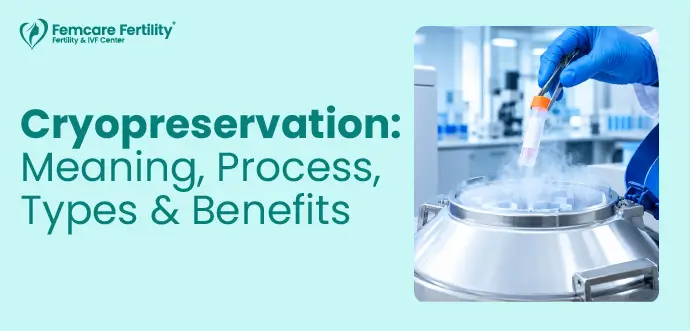
Cryopreservation is the process of freezing and storing living cells at very low temperatures, usually around −196°C, using liquid nitrogen. All biological activity ceases at this temperature, and cells can be preserved for many years without significant loss of viability. When needed, the frozen reproductive cells are carefully thawed and used during assisted reproductive procedures, offering greater flexibility and improving the chances of achieving a successful pregnancy.
The Science Behind Cryopreservation
The principle of cryopreservation is a process of preserving living cells at ultra-low temperatures without causing permanent damage to the cells. Cryoprotectants are added before freezing to reduce the formation of ice crystals in the product, which may damage the structure of the cells. The cells are then quickly cooled and stored in liquid nitrogen at −196°C, at which point all metabolism ceases. This helps to maintain a stable state of the cells until they are safely thawed for additional uses.
What are the Different Types of Cryopreservation?
Different types of cryopreservation are used depending on the patient’s fertility needs and treatment plan.
Embryo Cryopreservation
Embryo Cryopreservation is the process of freezing fertilised embryos in IVF for later use. The advanced freeze-thaw technology is utilised to preserve healthy embryos, so that couples can try to conceive at a later time without another egg retrieval cycle.
Egg Cryopreservation
It is ideal for women delaying motherhood due to personal, medical or professional reasons. These frozen eggs may later be thawed, fertilised and used in IVF treatment when the woman wants to become pregnant.
Sperm Cryopreservation
It is often used before cancer treatments, vasectomy or IVF surgeries. When required, frozen sperm can be used for IVF or ICSI and be viable for many years.
Ovarian & Testicular Tissue Cryopreservation
It is often recommended prior to cancer treatment or for prepubertal patients, in the hope of regaining fertility or reproductive function in the future.
Common Cryopreservation Techniques in IVF
The choice of cryopreservation techniques plays a vital role in improving survival rates, embryo quality and the overall success of IVF treatment.
Slow Freezing Technique
It has been used in fertility treatments for quite some time, but it is not as popular for eggs or embryos because it is less effective than new freezing techniques.
Vitrification Technique
This is an excellent method for freezing eggs and embryos as well as maintaining the survival of the eggs and embryos after thawing.
Ultra-Rapid Freezing
Like vitrification, it helps to reduce the formation of ice crystals and cellular damage, thereby promoting better post-thawing survival and successful fertility treatments in certain clinical conditions.
Understanding the Cryopreservation Process
Understanding the cryopreservation process can help patients feel more confident about fertility preservation. Although the exact steps may vary depending on whether eggs, sperm or embryos are being frozen, the overall procedure follows a similar pathway.
Step 1 – Fertility Evaluation
The first step in the cryopreservation process is a thorough fertility evaluation. Women might have AMH testing, antral follicle count (AFC), hormone testing, and pelvic ultrasound; men usually have a semen analysis and, if necessary, hormone testing.
Step 2 – Collection of Eggs, Sperm, or Embryos
Women receive ovarian stimulation, and egg retrieval is performed under sedation. Men typically donate a sample of their sperm; however, sometimes a recovery procedure is required.
Step 3 – Addition of Cryoprotectants
Cryoprotectants reduce the damage to the cells and help to enhance the viability of the reproductive cells after thawing and preparation for future use in fertility treatment.
Step 4 – Freezing Process
The most widely used method is vitrification, as it is able to rapidly freeze cells and reduce the formation of ice crystals.
Step 5 – Storage in Liquid Nitrogen
Once frozen, the preserved eggs, sperm, and embryos are kept in liquid nitrogen tanks at about −196ºC, at which temperature no biological activity occurs, thus ensuring the preservation of these reproductive cells for many years.
Step 6 – Thawing & Usage During IVF
Frozen eggs are fertilised, frozen sperm are utilised in IVF or ICSI, and frozen embryos are transferred in a Frozen Embryo Transfer (FET) cycle.
The Role of Cryopreservation in IVF
Today, cryopreservation in IVF is considered an essential component of assisted reproductive technology.
Participate in IVF treatment
This decreases the number of ovarian stimulation and egg retrieval treatments required and provides patients with more chances to become pregnant. It also enables the treatment to be customized based upon the patient’s medical status and reproductive desires.
Frozen Embryo Transfer (FET)
By postponing the transfer, the lining of the uterus will be better prepared for implantation. FET is routinely used in IVF treatment and is now associated with excellent pregnancy rates with modern vitrification techniques.
Fertility Preservation Before Medical Treatments
This will give reassurance and time to allow for a successful medical treatment so that the couple can seek to become a biological family again.
Delayed Pregnancy Planning
The reproductive potential for future pregnancy is better preserved by freezing the eggs or embryos at a younger age. This is an alternative that offers more flexibility so that individuals and couples can plan their families when they are ready.
What are the Key Benefits of Cryopreservation?
The advantages of cryopreservation extend beyond fertility preservation. It provides greater flexibility, supports successful IVF treatment and offers reassurance for future family planning.
Preserves Fertility for Future Use
This is particularly useful for women who are postponing their childbearing and women who are having medical treatment that could impact their ability to conceive. It helps ensure reproductive potential and allows for the opportunity for pregnancy when appropriate.
Increases IVF Flexibility
The embryos can be frozen and stored for future cycles for implantation, which may be more successful if the uterus is more receptive. It also enables patients to plan their treatment based on their personal and medical needs.
Reduces Need for Repeated Egg Retrieval
This alleviates physical discomfort, emotional stress and treatment expenses, and allows for further opportunities for pregnancy from previously preserved reproductive material.
Useful Before Cancer Treatments
Cryopreservation is a method by which the patient can preserve their eggs, sperm or embryos before treatment, which can help to protect their future fertility. This is a sign of hope for those who have recovered from cancer and finished their treatment to have children.
Improves Family Planning Options
It promotes delayed parenthood, future sibling planning and repeated multiple IVF attempts in the same cycle. This flexibility allows patients to make family building decisions based on their personal, medical and economic objectives.
What are the Potential Risks of Cryopreservation?
Although cryopreservation is considered safe and highly effective, patients should understand its potential limitations.
Survival Rate After Thawing
The cell quality, laboratory experience, method of freezing the cells, age, etc., are all contributing factors to survival, and vitrification is known to yield optimal post-thaw results.
Storage Limitations
Patients also have to pay annual storage fees and re-grant storage consent. The length of time and policies may differ among fertility clinics and by local laws.
Cost Considerations
Consultation fees, fertility testing, medications, freezing fees, and annual storage fees and future treatment costs for thawing or IVF should be taken into consideration. Knowing upfront what these costs are can aid in financial planning and decision-making.
Rare risks during freezing/thawing
Eggs, sperm, or embryos thawed may not survive or may not work as intended. But these risks become minimal when the advanced cryopreservation technology and an experienced embryology lab are applied.
What is the Success Rate of Cryopreservation in IVF?
Modern techniques, particularly vitrification, have led to excellent survival rates for frozen eggs, embryos, and sperm.
Factors Affecting Success
Fertility journeys are unique, and there are several factors that can ensure the success of cryopreservation.
Factors that can be significant:
- The age of the sample when it was frozen.
- The quality of eggs, sperm or embryos.
- Ovarian reserve
- Underlying fertility conditions
- Laboratory standards
- Experience of the embryology team
- Duration of storage
- The procedures for freezing and thawing.
Age and Egg Quality
Cryopreservation success is one of the most important factors that is influenced by age. Eggs from younger women who freeze their eggs tend to be healthier and more likely to survive the freezing process and to give a woman a greater chance of pregnancy following the thaw.
Freezing Technique Used
The most promising technique currently is vitrification, which freezes eggs and embryos quickly, lowering the amount of ice crystals formed and the percentage of eggs and embryos surviving after thaw.
How Much Does Cryopreservation Cost in India?
The cost of cryopreservation varies depending on the type of reproductive material being preserved, the fertility clinic, laboratory facilities and the duration of storage.
Egg Freezing Cost
The average price of Egg Freezing in India ranges between ₹80,000 to ₹1,80,000 per cycle. This typically involves ovarian stimulation, surveillance, egg retrieval and the egg freezing process.
Embryo Freezing Cost
The cost of freezing an embryo ranges from ₹20,000 to ₹50,000 per round, apart from IVF treatment. The cost will depend on how many embryos are frozen, laboratory costs and future thawing or Frozen Embryo Transfer (FET) costs.
Annual Storage Charges
The storage fees for most fertility clinics are around ₹10,000 to ₹30,000 per year, depending on the length of time for which the sperm is stored and the policy of the clinic you selected, along with any extended storage package they offer.
Factors Affecting Pricing
The overall cost of cryopreservation depends on several factors, including:
- Type of reproductive material being frozen
- Fertility medications required
- Number of eggs or embryos preserved
- Laboratory technology
- Cryopreservation technique used
- Duration of storage
- Reputation and expertise of the fertility centre
- Future thawing and IVF procedures
Who Should Consider Cryopreservation?
Cryopreservation is not just for couples undergoing IVF. It may be beneficial to many people who want to maintain their fertility for medical, personal or professional reasons.
Women Delaying Pregnancy
Egg freezing may be a consideration for women for many reasons, including career, education, lifestyle and financial issues. Preserving the eggs at a younger age will help keep egg quality well and provide flexibility in the planning of pregnancy.
Cancer Patients
Some cancer treatments, like some surgeries, chemotherapy and radiotherapy, can affect fertility. Patients may freeze their eggs, sperm or embryos before treatment and keep their potential to become a biological parent after they have recovered from cancer and completed their treatment.
Couples Undergoing IVF
If couples go through IVF, they have the option to freeze excess healthy eggs, which can be utilised in the future. This also reduces the number of rounds of ovarian stimulation and egg retrieval that will be required in the future for a woman who wants to become pregnant, making the treatment regimen easier and less expensive.
Low Ovarian Reserve Cases
For women with a low ovarian reserve, further fertility loss can be prevented by using the process of cryopreservation, which is the preservation of all healthy eggs. Early preservation of fertility will improve future options for pregnancy and contribute slightly to an individual’s fertility if IVF is needed in the future.
Storage Duration of Frozen Embryos, Sperm, and Eggs
One of the most common concerns patients have is whether frozen reproductive material loses its quality over time.
Storage Duration Guidelines
Eggs, sperm and embryos are preserved in liquid nitrogen at –196°C, where all biological processes are halted. The storage time allowed can be different across countries and depending on clinic policy and patient consent.
Aeration and Maintenance of Safety and Viability Over Time
Reproductive cells have been stored for many years, and successful pregnancies have been obtained—this is determined more by the age of the cells at the time they are frozen and their quality than by how long they are stored.
Cryopreservation vs Fresh IVF Transfer: What’s the Difference?
Both frozen and fresh embryo transfers can result in successful pregnancies. Now, let’s look at the differences:
| Factor | Cryopreservation (Frozen Transfer) | Fresh IVF Transfer |
| Timing | Embryo freeze in a subsequent cycle and transferred. | Embryos are transferred within the same IVF cycle. |
| IVF Cycle Planning | Offers greater flexibility and allows the uterus to recover before transfer. | Limited flexibility, as the embryo transfer takes place soon after egg retrieval. |
| Storage | Frozen eggs, sperm or embryos remain available for future treatment cycles. | Not for long term storage until frozen separately as additional embryos. |
| Repeat Attempts | Frozen embryos may be used for future IVF cycles without a second egg retrieval. | Another stimulation cycle may be required if no embryos remain. |
Your fertility specialist will determine which is best suited for you according to your age, hormone levels, quality of embryos and general health.
Applications of Cryopreservation
How Does Cryopreservation Support Fertility Care?
Cryopreservation has transformed reproductive medicine and continues to support various fertility treatments and medical procedures.
Some of its major applications include:
1. Fertility Preservation before Cancer Treatment
Those who have been diagnosed with cancer may be able to preserve their fertility before starting chemotherapy, radiotherapy or surgery that could impact their fertility.
2. Assisted Reproductive Technology (ART) – IVF
The cryopreservation process enables fertility experts to freeze excess embryos, eggs or sperm, making the treatment of IVF more flexible and providing more options for future pregnancies.
3. Egg Freezing for Delayed Parenthood
For those who want to have children later in life, due to work or other reasons, they can preserve their eggs when they are young and in good condition.
4. Sperm Banking
Sperm freezing is an option that men can consider before undergoing cancer treatment, vasectomy, military service or any other circumstance that might impact their future fertility.
5. Fertility Preservation for medical conditions
People with such health issues as endometriosis, autoimmune disorders, or low ovarian reserve might consider saving their reproductive cells before they become depleted further.
6. Programmes involving donor eggs and donor sperm
However, the process of cryopreservation makes donor-assisted reproduction more efficient and accessible as it allows fertility centres to safely preserve donor eggs and donor sperm until they are required.
7. Preservation of testicles and ovaries
Some children receiving treatment for cancer and patients who are unable to make mature eggs or sperm can save their reproductive tissue for future use to restore fertility.
How to Improve the Success of Cryopreservation
From choosing the right fertility centre to preserving eggs or embryos at the right time, every step plays an important role in achieving the best possible outcome.
Choose experienced fertility centre
Search for a centre with seasoned fertility specialists, a skilled embryologist, and an advanced laboratory that adheres to strict quality-control procedures. High survival rates after thawing are achieved in modern laboratories that employ sophisticated cryopreservation methods such as vitrification.
Proper fertility assessment
Your fertility specialist will first do a fertility evaluation to determine the best treatment plan before you start the process of cryopreserving your eggs.
This assessment could involve the following elements:
- Hormone blood tests
- Ultrasound scans
- Ovarian reserve assessment
- Semen test (for men)
- Review of medical and family history
Timely freezing decision
The activity of the ovaries and quality of eggs naturally wanes as you get older, and early planning is of great help for women who want to put off pregnancy. A timely decision can help reproductive cells to be preserved in good health with a higher potential of successful fertilisation and pregnancy later.
When to Consult a Fertility Specialist
While cryopreservation is an effective fertility preservation option, deciding whether it is right for you requires personalised medical advice. Consulting a fertility specialist early can help you understand your reproductive health and explore the most appropriate treatment options.
Fertility Preservation Concerns
Talk to a fertility specialist if you are concerned about the possibility of age-related fertility decline, have a history of early menopause or simply want to postpone parenthood to make informed decisions regarding fertility preservation.
IVF Planning
If you are considering IVF treatment, your doctor will consult whether the freezing of egg/sperm/embryos could enhance your IVF treatment. Cryopreservation can offer increased flexibility, less need for repetitive procedures and future pregnancy attempts.
Medical Conditions that affect fertility
Some health issues and treatments are associated with reduced reproductive health. If you find you have any of the following, you may want to talk to a fertility specialist:
- Have been diagnosed with cancer and need chemotherapy or radiotherapy
- Have endometriosis or polycystic ovary syndrome (PCOS)
- Have a low ovarian reserve
- Are about to undergo an operation that could potentially impact your reproductive organs
- Have severe male factor infertility
- Want to maintain fertility prior to gender affirming surgery
By consulting early, there is more time to discuss fertility preservation options before treatment commences.
Conclusion
If you are considering reproductive health options, it’s important to understand cryopreservation meaning, what cryopreservation is, why it works, and the various kinds of cryopreservation, as well as the techniques and the entire process. Today, there are new freezing techniques like vitrification, which has largely improved post-thaw survival rates, and fertility preservation has never been better.
When deciding to move forward with fertility preservation, it’s important to seek guidance from a seasoned fertility specialist as a first step in maintaining your future family-building options.
Protect Your Future Fertility with Cryopreservation
At Femcare Fertility, our experienced fertility specialists offer personalised fertility preservation solutions using advanced cryopreservation technology and state-of-the-art IVF laboratory facilities.
Book your consultation
FAQs
1. What is Cryopreservation in IVF?
In IVF, the process of freezing and storing eggs, sperm or embryos at very cold temperatures for later use is called cryopreservation. The frozen sperm or eggs can then be thawed and used later in fertility procedures like IVF or ICSI.
2. How do you define “cryopreservation”?
Cryopreservation is the freezing of living cells, tissues or reproductive material at ultra-low temperatures (usually with the use of liquid nitrogen). This process stops the cells from being active, but it doesn’t kill the cells so they can be used later.
3. How does the cryopreservation process work?
The procedure of cryopreservation includes a fertility assessment, reproductive cells collection, cryoprotectant(s) addition, freezing with specialised techniques, cells storage in liquid nitrogen and careful thawing during the cells requirement for therapy.
4. What are the different types of cryopreservation?
The main types of cryopreservation include:
- Egg cryopreservation
- Sperm cryopreservation
- Embryo cryopreservation
- Ovarian tissue cryopreservation
- Testicular tissue cryopreservation
This will vary according to the patient’s desire for fertility and health.
5. Which Cryopreservation Method is the best for IVF?
The most popular cryopreservation method for IVF is the technique of vitrification, which is characterized by quick freezing of eggs and embryos, thereby minimizing the ice crystal formation and enhancing the chance of survival after thawing.
6. What are the benefits of cryopreservation?
The following are some of the most important benefits of cryopreservation:
- Sperm and egg freezing for future use
- Some flexibility in IVF treatment
- Minimizing multiple egg removal procedures
- Supporting fertility preservation before cancer treatment
- Offering more choice about family planning
7. Is cryopreservation safe?
Yes. If carried out by an experienced fertility specialist with cutting-edge laboratory protocols, cryopreservation is considered safe, and well established as a fertility preservation technique. With the introduction of modern freezing methods, the danger of damage on freezing and thawing has been minimized.
8. For how long can embryos be frozen?
Properly frozen in liquid nitrogen, the embryo can be stored in a freezer for several years. Studies have demonstrated that embryo viability is not adversely affected by long-term storage if proper storage conditions are maintained.
9. What is the cost of cryopreservation in India?
The fees vary depending on the type of reproductive material being stored, the fertility clinic and the length of storage. The average price of egg freezing is ₹80,000 to ₹1,80,000 per cycle, and embryo freezing may cost from ₹20,000 to ₹50,000 per cycle (excluding the annual storage fees).
10. What is the difference between vitrification and slow freezing?
Vitrification involves super rapid cooling, which is used to avoid the formation of ice crystals, and it can lead to better survival after thawing. Slow freezing will bring down temperatures gradually and can have a slightly increased risk of crystal formation. In modern days, the most preferred method of freezing eggs and embryos is the vitrification method.
11. Is it possible to achieve pregnancy with frozen embryos?
Yes. When transferred in a Frozen Embryo Transfer (FET) cycle, frozen embryos have the ability to successfully lead to pregnancy. Today, pregnancy with a frozen embryo is not too different from fresh embryo transfer and often exceeds the success rate of fresh embryo transfer.
12. Who should consider cryopreservation treatment?
Cryopreservation may be a good option for:
- Women delaying pregnancy
- Couples undergoing IVF
- Patients who are about to receive chemotherapy or radiotherapy treatment for cancer.
- Women with low ovarian reserve
- Men needing to store sperm for medical treatment or for a vasectomy.
- Individuals with medical conditions that could impact future fertility
An infertility doctor consultation will help you decide if you should have your eggs frozen or not, depending on your situation.