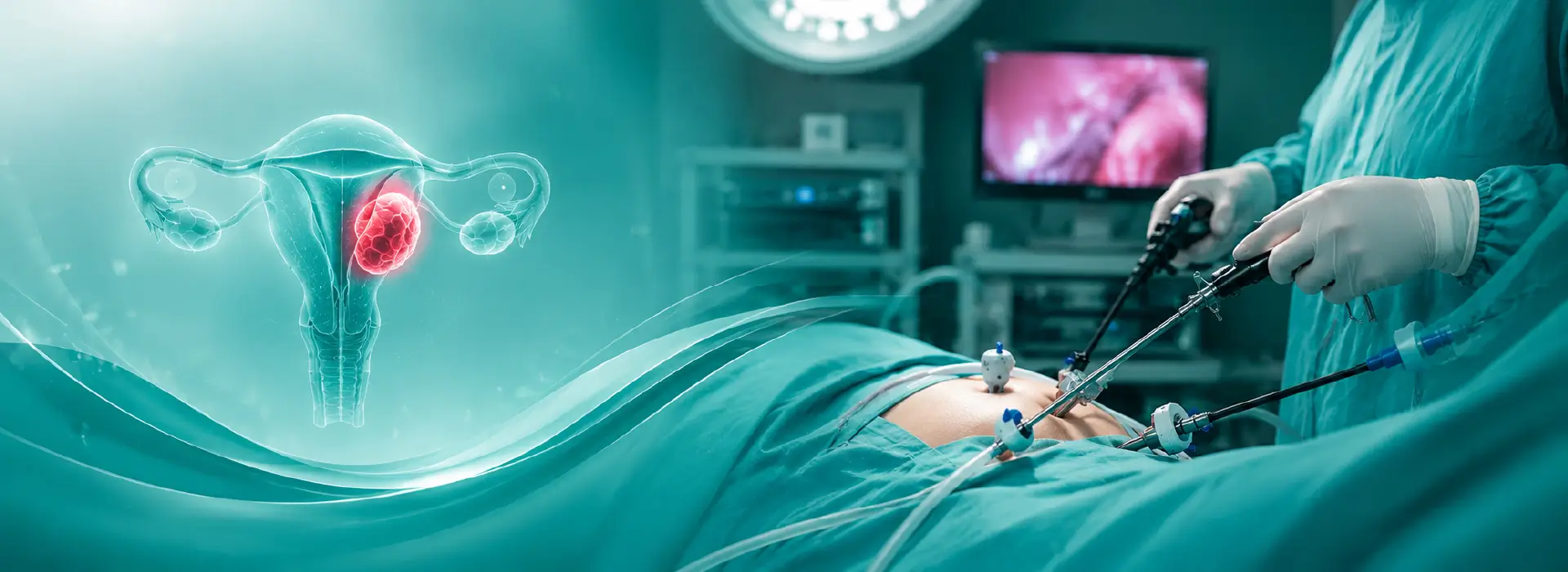
Do your uterine fibroids cause heavy periods or interfere with your life or with the ability to conceive? Laparoscopic Myomectomy is an advanced minimally invasive surgery technique that allows the removal of uterine fibroids without damaging the uterus or the ability to conceive in the future. Our fertility laparoscopic surgery specialist at Femcare Fertility has the experience to provide each patient with personalised care and to help you overcome the challenges.

Medical Director, Laparoscopic Myomectomy & Female fertility expert
12+ years of experience
Consultation Area: Pune

Chief Fertility Consultant and Clinical Head
Female fertility Consultant | Laparoscopic Myomectomy expert
13+ years experience
Consultation Area: Pune

Chief Embryologist
12+ years experience in reproductive medicine and advance ART technologies PhD in Genetics of Male Infertility
Consultation Area: Pune

Male Infertility Specialist | Laparoscopic Myomectomy & ICSI Expert
12+ years of experience
Consultation Area: Kolkata

Senior Specialist Embryologist
25+ years embryology expertise
Certified PGT specialist (IGENOMIX)
Consultation Area: Kolkata

Infertility Specialist & Female Fertility Expert MBBS, M.R.C.O.G (UK), Diploma in Psychological Counsiling, Fellowship in Reproductive Medicine, F.R.C.O.G (UK)
30+ years of experience
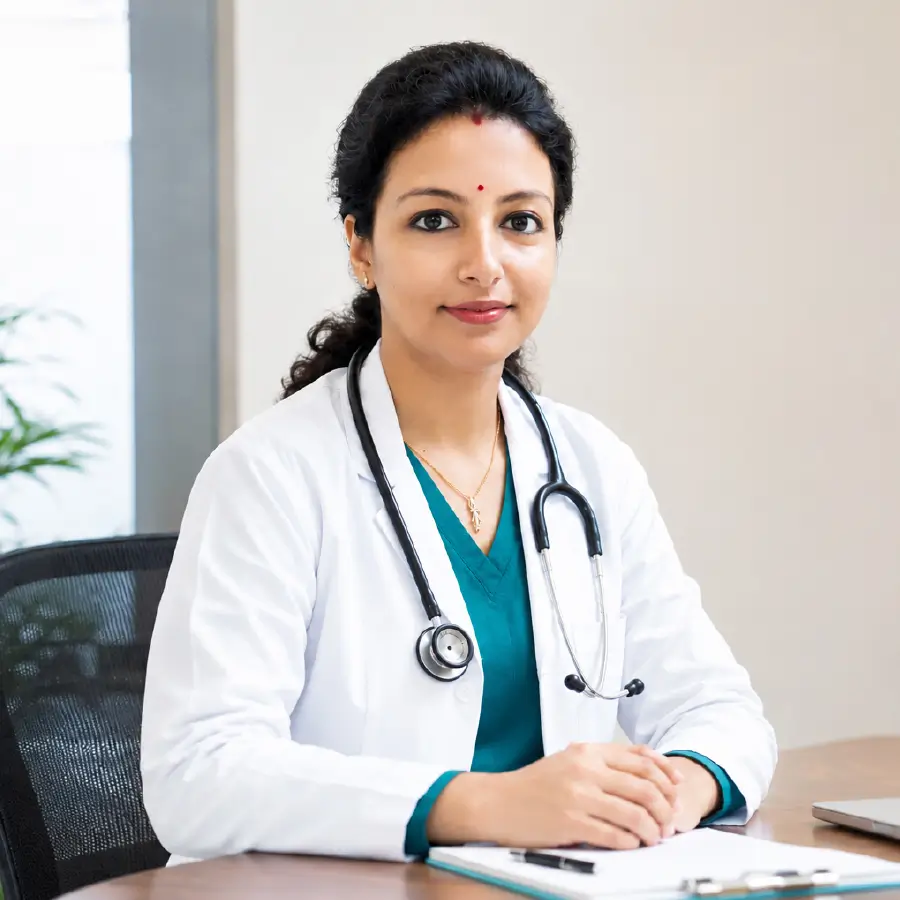
Infertility Specialist, MS, DNB, FRM, FMAS (Fellowship in Minimal Access Surgery), DMAS (Diploma in Minimal Access Surgery
14+ years of experience
Consultation Area: Kolkata
Located in the heart of Baner, our clinic offers advanced laparoscopic myomectomy treatment with state-of-the-art surgical facilities and personalised fertility care. Our experienced specialists focus on helping women overcome fibroid-related concerns while preserving their reproductive health in a comfortable and supportive environment.
To book an appointment in Pune, Call : +91-9967050566
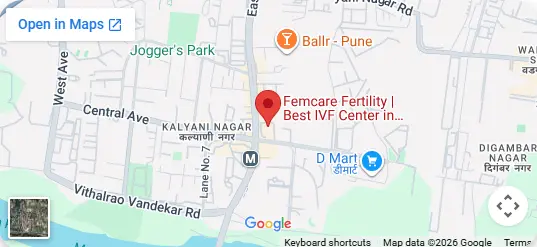
Our Kalyani Nagar centre combines modern technology with compassionate patient care to deliver effective fibroid treatment solutions. With a dedicated team of laparoscopic myomectomy fertility experts, we provide customised treatment plans designed to improve both gynaecological health and future fertility outcomes.
To book an appointment in Pune, Call : +91-9967050566
Our Entally clinic is committed to providing comprehensive women's healthcare and fertility services under one roof. Equipped with advanced diagnostic and surgical facilities, our specialists offer expert laparoscopic myomectomy procedures, ensuring safe treatment, faster recovery, and patient-centred care throughout the journey.
To book an appointment in Kolkata, Call : +91-8484069668
“Had a wonderful experience at Femcare Fertility. Dr. Pallavi is extremely knowledgeable, polite, and supportive throughout the journey. She explains everything patiently and makes patients feel comfortable and hopeful. The staff is also very caring and professional. Highly recommended for pregnancy care.”
“Dr. Pallavi Madam at Femcare Fertility Hospital encourages us very well. Her treatment is excellent and result-oriented. The staff are very friendly and cooperative.”
“I came all the way from ethiopia for IVf treatment. Today my pregnancy scan is good. I am so.happy that i choose Femcare fertility for IVF TREATMENT. Many people from Africa came here and got positive result.”
Laparoscopic myomectomy is a minimally invasive surgical technique that is used to remove uterine fibroids without the removal of the uterus. The procedure takes place through small cuts made in the abdomen with the help of special instruments and a thin camera called a laparoscope, which is used instead of the traditional open surgery. Many women prefer myomectomy laparoscopic surgery due to its benefits of having a shorter hospital stay, less discomfort after the surgery, less scarring, and a quicker recovery rate when compared to traditional surgery.
Laparoscopic myomectomy may be recommended for you if you have:
Laparoscopic myomectomy surgery may be ideal for women who want to keep their uterus and their ability to have children.
During this appointment, the doctor will talk with you about your symptoms, family history, menstrual periods, past pregnancies, and health issues. This assessment can help to decide if laparoscopic myomectomy is the most appropriate treatment for your fibroids.
Pelvic ultrasound, transvaginal ultrasound, MRI scans, blood tests and fertility evaluation may be conducted. These investigations are useful to help the surgeon make a diagnosis and to formulate an individual plan for you.
Several factors are taken into account when evaluating fibroids, including their size, location, symptoms, and plans for pregnancy. The doctor lets her know what he expects, any risks involved, the recovery process, and preparation for surgery.
If a general anaesthetic is used, the anaesthetist will be a specialist who will put you to sleep and make you feel comfortable during the surgery. For safety, your vital signs (heart rate, blood pressure, blood oxygen level, etc.) are watched at all times.
The laparoscope, which has a high definition camera, is placed through one incision and special surgical equipment is placed through the other incisions. Gently inflated abdomen with CO₂ gas for examination.
The surgeon selects the appropriate advanced laparoscopic instruments and carefully differentiates and removes the uterine fibroids, while ensuring the preservation of as much healthy uterine tissue as possible.
Once the fibroids have been taken out, the surgeon carefully sutures the uterine wall together with special sutures. Correct reconstruction is important to restore uterine strength and structure, especially in women who wish to become pregnant again.
After the uterus has healed, the bleeding is stopped, and then the surgical instruments are removed. The fibroids are removed through small incisions, and the incisions are carefully closed using sutures or suturing adhesive. Final inspection was carried out to check that the procedure had been completed.
After the surgery, the patients are transferred to the recovery room, where the doctors closely supervise their condition. Mild discomfort, bloating or fatigue is experienced by most women for a few days.
In this visit, the doctor looks at your symptoms, medical history, menstruation and your fertility plans. Additional tests are recommended, as it depends upon your condition, whether the laparoscopic myomectomy procedure is a good choice for you.
Diagnostic tests like pelvic ultrasound, transvaginal ultrasound, MRI scans, blood tests and fertility tests are done. These tests can help determine the location, size, and number of fibroids.
Patients are given instructions about medications and restrictions for the pre-operative period, as well as pre-operative precautions, once surgery is scheduled. Some prescription medications might have to be adjusted or temporarily discontinued.
Patients are taken to the hospital the day of surgery and put under general anaesthetic. A surgeon uses a laparoscope and special instruments to perform a laparoscopic myomectomy through small incisions in the abdomen.
Most women will make a rapid recovery from a laparoscopy. Extensive monitoring occurs for pain control, bleeding and general recovery. Depending on the complexity of the procedure and the person's health, the patient may be discharged on the day of or after an overnight stay at the hospital.
Light abdominal pain, bloating, tiredness, and spotting are common in the first two weeks. Most people can return to light activities in a few days.
Most women will slowly regain their normal routines such as working, exercising and daily activities. Follow-up visits are arranged to check the healing process and to be sure that the uterus is healing properly following laparoscopic fibroid surgery.
This recovery period will enable the uterine wall to recover completely, thereby minimising pregnancy complications and increasing the likelihood of a healthy pregnancy.
Follow-up visits are conducted regularly to ensure there is monitoring for reproductive health and in case fibroids can be identified again.
The laparoscopic myomectomy cost in India is usually between ₹80,000 and ₹2,50,000. Several factors influence the laparoscopic myomectomy surgery cost in India, such as:
Overall, the laparoscopic myomectomy surgery has a high success rate, and most women notice great improvement in their symptoms and reproductive function.
This age group has good fertility potential, and the uterus heals rapidly from surgery. When fibroids are the main issue causing infertility, the pregnancy rate following the removal of these tumours is pretty good.
Following the laparoscopy myomectomy, many women find that they become more fertile, the chance of miscarriage is decreased, and they feel better, with less pain and bleeding in the pelvis.
When fibroids are causing difficulty with conception or implantation, it is possible to substantially affect fertility in this age range without undergoing laparotomy, but rather by performing a laparoscopic myomectomy.
Laparoscopic myomectomy might be beneficial for women in their early 40s, especially when their fibroids are causing severe symptoms or impacting fertility treatment.
In women older than 45 years, laparoscopic fibroid surgery is primarily performed to relieve symptoms like heavy periods, painful periods or pelvic pressure and improve quality of life.
These are the factors that affect success rates:
Laparoscopic myomectomy has many benefits over open surgery and may be considered the best approach for women with uterine fibroids who want to retain their fertility and recover faster.
The most significant advantage of laparoscopic myomectomy is the removal of fibroids without the need to remove the uterus. It is a great choice for those women who want to conceive in the future. The procedure can help to restore the normal shape and function of the uterus, which may help to increase the likelihood of successful conception and pregnancy.
A laparoscopic myomectomy is conducted through a number of small incisions in the abdomen that are less traumatic than the incisions used in traditional open surgery. This is a minimally invasive method which causes less trauma to surrounding tissues and muscles, thus allowing for a more comfortable recovery and less surgical complications.
As the procedure has smaller incisions and there is less disruption to the tissue, patients have less postoperative pain than with open abdominal surgery. Medications can help most women control any discomfort and resume their normal activities in a shorter period of time.
Recovery after laparoscopic myomectomy is typically much quicker than after conventional surgery. Most women can stand up and do light activities within a few days and are able to return to work 1-2 weeks after the procedure, based on their healing time and the complexity of the procedure.
The small incisions created during laparoscopy surgery create very small scars, which will fade with time. The cosmetic benefit is frequently desirable to the patient who desires effective treatment without the larger scars of traditional abdominal surgery.
Doctors can remove fibroids using advanced laparoscopic techniques that ensure greater precision of operation and minimise blood loss. This helps patients to experience recovery with a lower risk of blood transfusion and a more comfortable experience after surgery.
The majority of women that have a laparoscopic myomectomy can go home the same day or within 24 hours of the procedure. The shorter a person stays in the hospital the less the cost to healthcare, the less chance that they will develop a hospital-acquired infection, and the more time they have to recuperate at home.
As with any surgery, laparoscopic myomectomy surgery does have some risks, but are not common when performed by experienced surgeons.
After surgery, this is what most patients will find:
Your doctor will give you individual guidelines on exercise, work and sexual activity, as well as planning for the next pregnancy.
To help with recovery and fertility, do:
You should consult a fertility specialist if you have uterine fibroids and are experiencing difficulty conceiving, recurrent miscarriages, heavy menstrual bleeding, pelvic pain, or irregular periods. Early evaluation can help identify whether fibroids are affecting your fertility and determine if laparoscopic myomectomy is the right treatment option.
IUI is a fertility procedure in which specially prepared sperm is directly put into the uterus during the process of ovulation. This treatment offers a better chance of fertilisation and is a usual treatment for mild cases of infertility, unexplained infertility and some causes of male infertility.
Click here to know more about IUI treatment
IVF is a high-tech fertility procedure where eggs are taken from the ovary, fertilised with sperm in a lab and implanted into the uterus. It is recommended for couples seeking treatment for multiple reproductive issues that cause infertility.
Click here to know more about IVF treatment
A hysteroscopy is a procedure that is minimally invasive and is used to assess the inside of the uterus. It aids diagnosis and treatment of uterine fibroids, uterine polyps, uterine adhesions, uterine septa, etc., which may impact fertility, placement or pregnancy without needing to perform major surgery.
Laparoscopic surgery for endometriosis can help destroy endometrial tissue that has grown outside the uterus. The procedure can help reduce pain and restore normal pelvic anatomy and may enhance fertility for women who have experienced a decrease in their fertility due to moderate or severe endometriosis.
There are techniques used to help preserve fertility, like egg or embryo freezing or preserving ovarian tissue. There are various choices to help ensure that women preserve their future fertility before medical treatments, before becoming pregnant later in life or before conditions that could affect their fertility are treated.
All our doctors are highly experienced and have undergone extensive training in the areas of infertility, gynaecology and laparoscopy and have expertise in diagnosing and treating uterine fibroids whilst maintaining the patient's reproductive health and fertility.
To provide accurate treatment, increased safety, decreased recovery time and better patient results, we employ state-of-the-art laparoscopic equipment, modern diagnostic technologies and innovative surgical techniques.
Each patient gets an individualised treatment plan, depending on their symptoms, fibroid characteristics, medical history, and fertility goals, in order to find the most appropriate and effective approach to treatment.
We offer a range of services for fibroid diagnosis and treatment, fertility assessment and support and pregnancy. All in one place, for your convenience.
We believe in treating you with compassion, communicating openly and honestly, supporting your emotions, and keeping you informed and confident throughout your treatment.
All of our clinics are based on evidence-based medical protocols and strict safety measures in order to provide top-notch care and treatment so that our patients can benefit from the best possible outcomes.
At Femcare Fertility, our experienced fertility and laparoscopic specialists provide personalised care to help you overcome fibroid-related challenges and take the next step towards a healthier, more confident future.
Women with symptomatic uterine fibroids who do not want to have their uterus removed may be well suited for laparoscopic myomectomy. This is typically suggested for women who are infertile, who have had miscarriages, heavy periods, pain, or fibroids that have an impact on the shape of the uterus.
The actual surgery of the myomectomy takes between 1 and 3 hours, depending on the size, number, and location of the fibroids. Patients may be under medical observation for several hours following hospital discharge, including preparation and recovery time.
Factors that contribute to the success of a laparoscopic myomectomy include the following: the patient's age, fertility status, fibroid size and location, and overall uterine health. The surgeon's skill and the patient's compliance with the postoperative guidelines after the surgery are also crucial components in the success of the results.
The laparoscopic myomectomy cost may differ from case to case, as each patient is unique. The overall cost of the treatment can be affected by various factors, including the complexity of the surgery, the hospital's level of facilities, the surgeon's experience, diagnostic tests, anaesthetic costs, and after-surgery care.
Yes, laparoscopic myomectomy is a safe and effective treatment if done by a skilled laparoscopic surgeon. Minimally invasive technique minimises surgical trauma, recovery time and risk of complications over that of traditional open surgery.
During the surgery, patients are under general anaesthesia and will not feel any pain during the surgery. A slight belly ache, cramping or mild abdominal pain after surgery can be controlled by taking medications and will pass in several days.
In most cases, only one laparoscopic myomectomy surgery is needed to remove fibroids successfully. But if new fibroids grow or if any other condition that affects fertility exists, further treatment or monitoring may be necessary.
Patients will need to take any medications prescribed and follow all post-operative advice given by their doctor, as well as attend follow-up appointments. Until full recovery, avoid heavy lifting, strenuous exercise and other intense activities.
Laparoscopic myomectomy may be the recommended procedure if uterine fibroids are thought to affect pregnancy, embryo implantation or fertility. It can also be recommended if fibroids are causing major symptoms that are affecting quality of life and reproduction.
Seek a fertility specialist's advice if you are experiencing fibroids and are infertile, have had recurrent pregnancy loss, heavy menstrual bleeding, difficulty conceiving, pelvic pain. If you have a fibroid, you can find out if it will affect your fertility and reproductive health with a thorough evaluation at an early stage.
Fill in the details below to get a callback instantly
2nd Floor, Avenue Imperia, Baner Gaon, Pune, Maharashtra 411045
Call :+91 88550 33028
Office 102, 1st Floor, Suman Business Park, Kalyani Nagar, Pune, Maharashtra 411014
Call :+91 99670 50566
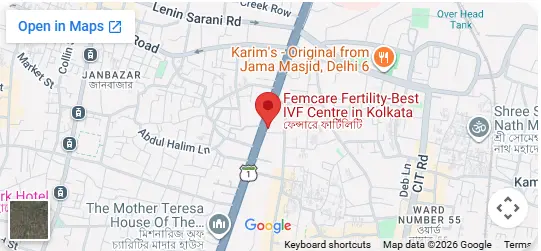
1st Floor, 162B, Acharya Jagdish Chandra Bose Rd, Entally, Kolkata, West Bengal 700014
Call :+91 84840 69668