
Infertility affects roughly 1 in 6 couples in India, and for most of them the question is not whether treatment exists, but which one is right for their situation. At Femcare Fertility, we offer the full range of infertility treatments across our centres in Pune and Kolkata, each tailored to a couple’s specific diagnosis, age, and medical history. There is no single best fertility treatment. There is only the right one for you.
No two fertility journeys look the same.
A couple struggling with irregular ovulation will need a different plan from someone dealing with blocked tubes or low sperm count. That difference matters because choosing the right fertility treatment often begins with understanding why pregnancy has not happened yet.
IVF is the most well-known fertility treatment, and for good reason. It’s also the most effective for a wide range of infertility causes. Eggs are retrieved from the ovaries, fertilised with sperm in our embryology lab, and the resulting embryo is transferred into the uterus. The process typically takes 3 to 5 weeks per cycle.
IVF is recommended when fallopian tubes are blocked or absent, when ovarian reserve is low, when previous IUI cycles have failed, or when a couple has unexplained infertility. It’s also the standard route for couples who need genetic testing of embryos before transfer (PGT).
Polycystic Ovary Syndrome (PCOS) is now increasingly referred to as Polyendocrine Metabolic Ovarian Syndrome (PMOS) in updated clinical literature. The ovaries develop multiple small follicles that do not mature into eggs regularly, leading to irregular or absent ovulation. Weight gain, excessive hair growth, acne, and irregular periods are common symptoms.
Treatment at Femcare depends on what the patient needs. For women who are not yet trying to conceive, the focus is on hormonal regulation and lifestyle management. For those trying to get pregnant, ovulation induction with medication is usually the first step. Where that doesn’t work, IUI or IVF with stimulation protocols adjusted for PCOS may follow. The key with PCOS is not rushing to the most aggressive treatment, but matching the intervention to the severity of the condition.
IUI is a less intensive procedure and is often the first fertility treatment a couple tries. Prepared sperm, from the partner or a donor, is placed directly inside the uterus at the time of ovulation, reducing the distance sperm needs to travel to reach the egg.
It’s a short outpatient procedure, takes about 15 to 20 minutes, and doesn’t require anaesthesia. IUI works best for couples with mild male factor infertility, cervical mucus issues, or unexplained infertility where the fallopian tubes are open and egg reserves are adequate.
ICSI is used alongside IVF when sperm quality is poor. Rather than leaving the egg and sperm to fertilise naturally in a dish, an embryologist selects a single healthy sperm and injects it directly into each mature egg under a microscope.
It’s the standard approach for severe male infertility, low sperm count, poor sperm motility, abnormal morphology, or when sperm has been surgically retrieved via TESA or PESA. ICSI significantly improves fertilisation rates in these cases.
Comprehensive screening and targeted treatment for common hormonal and physiological conditions.
Not every couple needs assisted reproduction. Follicular monitoring is a diagnostic and tracking tool that maps the natural cycle through a series of transvaginal ultrasound scans, typically starting on day 2 or 3 of the menstrual cycle. The scans track follicle growth in the ovaries and endometrial thickness. When a follicle reaches the right size, around 18 to 20mm, it signals that ovulation is imminent. This information guides the timing of intercourse, IUI, or medication adjustments. For couples trying naturally or on ovulation induction medication, follicular monitoring removes the guesswork.
PCOD and PCOS are related but not identical. PCOD refers to a condition where the ovaries release immature or partially mature eggs, which can accumulate as cysts. It’s generally considered less severe than PCOS and often responds well to lifestyle changes, dietary management, and, where needed, mild hormonal therapy. Many women with PCOD conceive naturally with the right support. Early identification and management makes a real difference.
Female infertility can stem from many different causes: ovulation disorders, fallopian tube damage, uterine abnormalities (fibroids, polyps, a septum), endometriosis, age-related decline in egg quality, or hormonal imbalances affecting implantation. The evaluation at Femcare begins with a detailed history and physical examination, followed by blood tests (AMH, FSH, LH, estradiol, thyroid function) and a transvaginal ultrasound. A hysteroscopy or laparoscopy may be recommended if uterine or tubal issues are suspected. The findings drive the treatment plan, whether that’s ovulation induction, surgery to correct a structural problem, or proceeding to IUI or IVF.
About 40 to 50% of infertility cases involve a male factor, yet male infertility is still underdiagnosed because partners often don’t present for evaluation together. Semen analysis is the starting point: it assesses sperm count, motility, morphology, and volume. Abnormal results may point to testicular, hormonal, genetic, or anatomical causes. Where sperm quality is mildly reduced, lifestyle changes and targeted supplementation can help. Where counts are very low, motility is severely impaired, or there is obstructive azoospermia (no sperm in the ejaculate due to a blockage), IVF with ICSI using surgically retrieved sperm is the path forward. Male fertility treatment at Femcare is managed alongside the female partner’s care, because both sides of the picture matter.
Before an embryo can implant in the uterus, it must break out of its protective outer shell (the zona pellucida), a process called hatching. In some embryos, particularly those that have been frozen and thawed or belong to older patients, this shell can be harder than usual, making it difficult for the embryo to hatch naturally. Assisted laser hatching uses a precise, controlled laser to create a small opening in the zona pellucida just before embryo transfer. It’s a brief procedure done in the embryology lab and doesn’t damage the embryo. It’s not recommended for every IVF cycle, but in cases where embryo quality is good yet implantation has previously failed, it can be a meaningful addition to the protocol.
When a woman’s own eggs cannot be used due to premature ovarian failure, very low ovarian reserve, advanced age, or repeated IVF failures with poor egg quality, donor egg IVF offers a path forward. Eggs from a young, healthy, medically screened donor are retrieved, fertilised with the partner’s or donor sperm, and the resulting embryo is transferred into the intended mother’s uterus. The donor remains anonymous and goes through thorough medical and genetic screening. The intended mother carries the pregnancy. Many couples find donor egg IVF a deeply meaningful option, because the experience of pregnancy, delivery, and parenthood is fully theirs.
Women are born with a fixed number of eggs, and both the quantity and quality decline with age. Egg freezing lets a woman preserve her eggs at their current quality for use in the future. The process is identical to the first half of an IVF cycle: ovarian stimulation, monitoring, and egg retrieval. The retrieved eggs are then vitrified (flash-frozen) and stored. When the woman is ready to pursue pregnancy, the eggs are thawed, fertilised, and transferred. It’s a practical option for women who aren’t ready to have children now but want to keep the possibility open. It’s also strongly recommended before chemotherapy or radiation, which can permanently damage ovarian function.
An IVF cycle often produces more good-quality embryos than are needed for a single transfer. Rather than discarding them, these embryos can be vitrified and stored for future use. Frozen embryo transfers (FET) are an increasingly common and effective option. Survival rates after vitrification are above 95%, and pregnancy rates from frozen embryos are comparable to, and in some cases better than, fresh transfers. Embryo freezing also makes it possible for couples to attempt a second pregnancy without starting a full IVF cycle from scratch.
When the male partner has very low or no sperm, or carries a genetic condition that shouldn’t be passed on, donor sperm IUI is an option. Sperm from an anonymous, medically and genetically screened donor is prepared in the lab and placed into the woman’s uterus at ovulation, following the same procedure as standard IUI. Donor sperm is also used by single women choosing to conceive without a partner.
Several structural conditions of the uterus and fallopian tubes cause or contribute to infertility. Endoscopic surgery (laparoscopy and hysteroscopy) allows these to be diagnosed and treated through very small incisions, using a camera and fine instruments. Laparoscopy gives a direct view of the pelvic organs. It’s used to diagnose endometriosis, remove ovarian cysts, treat tubal blockages, or address scar tissue (adhesions). Recovery is faster than open surgery, usually 2 to 5 days, and the risk of complications is low. Where surgery can meaningfully improve the chances of natural or assisted conception, it is worth doing before proceeding to IVF.
Uterine fibroids are non-cancerous growths that develop in or around the uterus. Not all fibroids affect fertility, but those that distort the uterine cavity or block the fallopian tubes can interfere with implantation and carry a higher risk of miscarriage. Laparoscopic myomectomy removes these fibroids through keyhole surgery, preserving the uterus. Small incisions are made near the navel and lower abdomen; a camera and instruments are inserted to excise the fibroids and repair the uterine wall. Most women resume normal activity within a week and can attempt conception 3 to 6 months after surgery, once the uterus has healed.
Fallopian tube blockage is one of the leading causes of female infertility. Blockages can occur at the end closest to the ovary, at the middle section, or near the uterine opening, each requiring a different surgical approach. Laparoscopic tuboplasty uses a camera and fine instruments to clear or reconstruct the blocked tube. It’s most effective for mild adhesions or distal blockages (at the fimbrial end). Where both tubes are severely damaged, IVF is typically a better option than surgery. But for women with partial or single-tube blockage and otherwise normal fertility, tuboplasty can restore the ability to conceive naturally.
Cryopreservation is the umbrella process by which eggs, sperm, or embryos are preserved at very low temperatures (around -196 degrees Celsius, in liquid nitrogen) for extended periods. The technique used at Femcare Fertility is vitrification, an ultra-rapid freezing method that prevents ice crystal formation and preserves cellular integrity far better than older slow-freeze methods. Cryopreservation is used to store surplus embryos from IVF cycles, preserve eggs or sperm before cancer treatment, bank donor gametes, and protect fertility in patients with conditions likely to affect ovarian or testicular function over time.
Fertility treatments are medical interventions that help individuals and couples conceive when natural conception has not occurred or is unlikely due to an identified condition. They range from medication to support or trigger ovulation, to procedures like IUI that improve the odds of natural fertilisation, to assisted reproductive technologies like IVF and ICSI where fertilisation happens in a laboratory.
Not every fertility problem requires IVF. The right starting point depends on the diagnosis. A couple where the woman has open fallopian tubes, regular ovulation, and the male partner has mildly reduced sperm count will often try IUI first. A couple where both tubes are blocked, or where the male partner has azoospermia, will go directly to IVF. The treatment path follows the diagnosis, not a default protocol.
Age is the single most important factor in fertility. A woman’s egg quality and quantity decline steadily from her early 30s, with a sharper drop after 35. This affects which treatment is appropriate and how quickly to move.
Women under 35 with no identified cause for infertility may reasonably try IUI for 3 to 4 cycles before moving to IVF. Women between 35 and 38 are usually advised to move to IVF after fewer IUI attempts, or sometimes directly. Women over 38 generally benefit from starting with IVF because time and egg reserve are both working against them. Ovarian reserve testing (AMH and antral follicle count) gives a more precise picture than age alone and should be part of every evaluation.
For men, age also matters, though less dramatically. Sperm quality does decline after 40, with higher rates of DNA fragmentation, which can affect embryo quality and miscarriage risk.
The underlying diagnosis determines the treatment. Blocked fallopian tubes require either surgical repair (if suitable) or IVF. Ovulatory disorders are usually treated first with medication, then IUI, then IVF if needed. Severe male factor infertility means IVF with ICSI from the start. Endometriosis, depending on its severity, may need laparoscopic treatment before or alongside fertility treatment. Uterine fibroids or a septum may require surgical correction first. PCOS with anovulation responds to ovulation induction, and many women conceive on medication alone.
Unexplained infertility, where all standard tests come back normal, is often treated empirically, starting with IUI and proceeding to IVF if multiple cycles don’t result in pregnancy.
A thorough diagnostic workup is the foundation of any good treatment decision. At Femcare Fertility, this means blood tests (AMH, FSH, LH, estradiol, prolactin, thyroid), transvaginal ultrasound, semen analysis, and where indicated, hysteroscopy or laparoscopy for uterine and tubal evaluation.
The diagnosis tells us what we’re dealing with. Treatment without a clear diagnosis is guesswork. And guesswork costs couples time, money, and emotional energy they can’t afford to waste.
Fertility treatment cost in India varies by procedure type, the city and clinic, the number of cycles required, and additional services like medication, genetic testing, or donor programmes. The table below reflects approximate ranges for a single cycle at Femcare Fertility across our Pune and Kolkata centres.
Disclaimer: Treatment cost depends on diagnosis, medication, laboratory support, fertility condition, and personalised treatment planning. Final treatment costs may vary. EMI options are available.
| Fertility Treatment | Approximate Cost in India |
|---|---|
| IUI (Intrauterine Insemination) | ₹1,999 – ₹20,000 |
| Donor Sperm IUI | ₹15,000 – ₹40,000 |
| IVF (Standard Cycle) | ₹90,000 – ₹2,50,000+ |
| ICSI (Advanced Injection) | ₹1,50,000 – ₹3,00,000+ |
| Follicular Monitoring | ₹1000 – ₹3,000 |
| Egg Freezing | ₹1,00,000 – ₹2,00,000+ |
| Donor Egg IVF | ₹2,00,000 – ₹3,50,000+ |
| Fertility-related Endoscopic Surgeries | Based on the condition |
Most couples don't realise how much the clinic matters until they're already in the middle of treatment. The lab quality, the experience of the embryologists, the way the doctor communicates at each stage — these things directly affect outcomes, not just the experience of being a patient.
Here's what sets Femcare Fertility apart:
Consistently high IVF success rates across our Pune and Kolkata centres
State-of-the-art embryology lab with strict quality protocols at every stage
Fertility specialists with 10 to 20+ years of experience in reproductive medicine
Dedicated embryologists, not general lab staff, handling every cycle
Individualised treatment plans reviewed by the doctor managing your case
Full cost transparency with written breakdown before treatment begins
No-cost EMI options available at all centres
Dedicated support programme for international patients
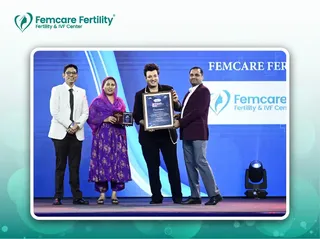
Femcare Fertility has received the Times Health Icon award for Best Fertility Center, IVF Excellence Awards in both 2024 and 2025, Silicon India recognition, and the Radio City excellence award for IVF treatment.







The most dedicated minds in clinical embryology and reproductive medicine.

Medical Director, MD, DGO, FRM, MBBS In vitro fertilization Specialist & Gynecologist
12+ years of experience
Consultation Area: Pune

Chief Fertility Consultant and Clinical Head
IVF Specialist, endoscopic surgery, immunology & regenerative therapies
13+ years experience
Consultation Area: Pune

Chief Embryologist
12+ years experience in reproductive medicine and advance ART technologies PhD in Genetics of Male Infertility
Consultation Area: Pune

Infertility Specialist, MBBS(Gold Medalist), MS, MCh (Reproductive Medicine)
12+ years of experience
Consultation Area: Kolkata

Senior Specialist Embryologist
25+ years embryology expertise
Certified PGT specialist (IGENOMIX)
Consultation Area: Kolkata

Infertility Specialist & Female Fertility Expert MBBS, M.R.C.O.G (UK), Diploma in Psychological Counsiling, Fellowship in Reproductive Medicine, F.R.C.O.G (UK)
30+ years of experience

Infertility Specialist, MS, DNB, FRM, FMAS (Fellowship in Minimal Access Surgery), DMAS (Diploma in Minimal Access Surgery
14+ years of experience
Consultation Area: Kolkata
"We had been trying for 7 years and had almost given up. A friend suggested Femcare, and honestly we didn't come in with much hope left. Dr. Pallavi and the team changed that. The staff were kind, the process was explained clearly at every stage, and we never felt rushed or dismissed. I am now 3 months pregnant. There are no words."
"My journey went from timed intercourse to IUI to IVF over several years, and nothing had worked. When I came to Femcare Fertility in Kalyani Nagar, Dr. Richa Sharma took the time to understand the full picture before suggesting we try IVF again. She never pushed us, never made us feel like a number, and was with us every step of the way. I'd recommend Femcare to anyone going through this."
"I had PCOS and had been struggling to conceive for a long time. The doctors at Femcare walked us through the IUI and IVF options without making it feel overwhelming. What stood out was how transparent everything was, the costs, the process, what to expect. The clinic is well-equipped and the staff genuinely care. We're now expecting our first baby."
There is no single best fertility treatment. The right option depends on the diagnosis. IVF has the highest success rates per cycle and works across the widest range of causes, but it’s not always the first or only option. Couples with mild infertility, open tubes, and good sperm quality may achieve pregnancy with IUI or ovulation induction alone. The best treatment is the one matched to what is actually causing the problem.
Fertility treatment costs in India range widely depending on the procedure. IUI costs approximately Rs 8,000 to Rs 15,000 per cycle. A basic IVF cycle runs between Rs 90,000 and Rs 1,50,000. IVF with ICSI, donor programmes, or genetic testing will cost more. Costs also vary by city and clinic. At Femcare Fertility, we provide a full cost breakdown before treatment starts, with no hidden charges.
Start with a diagnosis. A proper evaluation of both partners, including blood tests, ultrasound, and semen analysis, tells you what you’re dealing with. The treatment follows from that. Your doctor will factor in your age, how long you’ve been trying, your test results, and your preferences about invasiveness and cost to recommend the most appropriate path. Don’t choose a treatment before you have a clear diagnosis. That gap is where couples lose the most time.
Fill in the details below to get a callback instantly
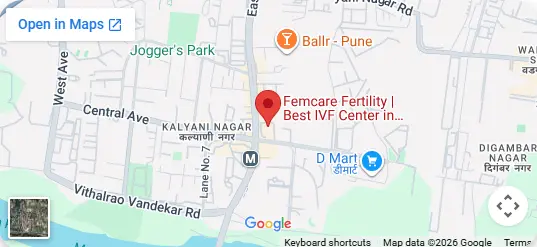
2nd Floor, Avenue Imperia, Baner Gaon, Pune, Maharashtra 411045
Call :+91 88550 33028
Office 102, 1st Floor, Suman Business Park, Kalyani Nagar, Pune, Maharashtra 411014
Call :+91 99670 50566
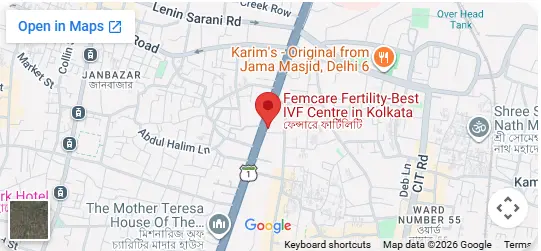
1st Floor, 162B, Acharya Jagdish Chandra Bose Rd, Entally, Kolkata, West Bengal 700014
Call :+91 84840 69668