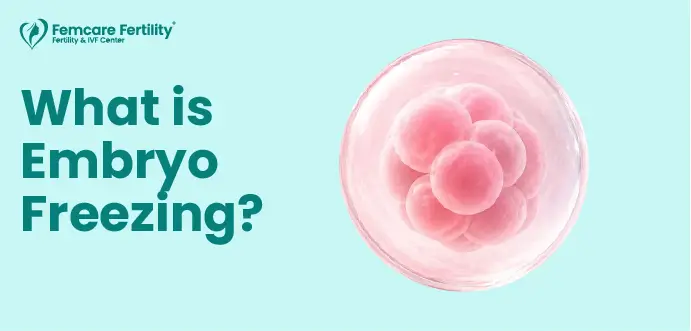
What is Embryo Freezing (Embryo Cryopreservation)? Process, Cost, Risks, Benefits & Success Rates
Advances in reproductive technology have changed the way people plan and safeguard their fertility. The greatest advancement in assisted reproductive technology (ART) has been known as ‘embryo freezing‘. The technology enables embryos produced during an IVF cycle to be safely frozen and stored for later, providing individuals and couples with more choice around family planning.
Embryo preservation can help preserve the potential for having a biological child in the future when you are not ready to conceive, are undergoing fertility treatments or have medical treatments that impact fertility. The use of modern freezing technology has greatly increased the success rate of frozen embryo transfer, making it as successful as, if not more successful than, fresh embryo transfer.
If you are undergoing IVF, you may have questions about embryo freezing such as: What is embryo freezing? How does the process of embryo freezing work? What is the cost of embryo freezing in India? Understanding these points will help you make more informed decisions throughout your fertility journey.
Here, we will discuss all you need to know about embryo cryopreservation, embryo freezing such as the procedure, advantages, disadvantages, chances of success, how long the embryos remain viable for, the costs, and who should freeze embryos.
What is Embryo Freezing (Embryo Cryopreservation)?
Embryo freezing or cryopreservation is a fertility preservation method that involves freezing and storing embryos, made via in vitro fertilisation (IVF), at an ultra-low temperature for future pregnancy.
In an IVF cycle, eggs are taken out of the ovary and combined with sperm in a special laboratory. The embryos are then closely monitored for a few days to see how quickly they are growing and how healthy they look. It is possible to freeze one or more healthy embryos for future use, rather than transferring all of the embryos straight away.
The embryos are frozen using the latest freezing techniques, usually the use of vitrification that avoids the creation of harmful ice crystals in the cells. After being frozen, the embryos are kept at about -196°C in liquid nitrogen, in which all biological activity is frozen out. This enables the embryos to be safely stored for many years without appreciable deterioration.
Once the individual or couple is ready to conceive, the frozen embryos are slowly thawed and then transferred into the uterus during a Frozen Embryo Transfer (FET) cycle.
Embryo cryopreservation is now a standard component of IVF treatment as it provides flexibility, enhances IVF treatment planning and can help to improve the likelihood of a successful pregnancy and minimise the need for repeated ovarian stimulation and egg retrieval procedures.
Why is Embryo Freezing Recommended?
There are a few medical and personal indications for embryo freezing. For people with fertility desires and health issues, fertility specialists may urge the freezing of embryos to enhance the chances for future pregnancy.
Fertility Preservation
If a person or couple is planning to have children in the future, then embryo freezing can help preserve their fertility. It is especially valuable for individuals waiting to become parents or undergoing medical procedures which may impact their fertility.
Future Pregnancy Planning
Embryo freezing is the option that many couples consider when they want to have more children. Once healthy embryos can be frozen, they can grow their family in the future without having to repeat the entire IVF cycle or additional egg harvesting.
Delayed Embryo Transfer
If a woman’s uterus lining is not ready, she has high hormone levels, or she needs more treatments, her doctor may suggest waiting to transfer the embryo. When conditions are more favourable for transferring the embryo, then it can be done through the freezing process.
For medical or health reasons
Embryo freezing may be offered to patients who have cancer, or other diseases that could be treated with chemotherapy and radiotherapy and/or treatments that would affect fertility, as a means of preserving their potential to have a biological (cancer) pregnancy following their treatment.
More than one IVF Cycle Plan
If more than one embryo survives during a single IVF treatment, there is the option to freeze the extras for future use. This decreases the need for repeated ovarian stimulation, egg collection and further rounds of IVF treatment.
The Science Behind Embryo Cryopreservation – How it Works?
To achieve success in embryo cryopreservation, state-of-the-art laboratory procedures must be used to ensure that embryos are preserved without harming the cells.
The importance of cryopreservation in IVF
During IVF treatment, embryo cryopreservation enables healthy embryos produced after fertilisation to be frozen and stored to be used in the future. This gives more flexibility in the treatment and helps with more than one pregnancy, and minimises the number of IVF cycles required.
Use of Ultra-Low Temperatures
Embryos are frozen (vitrification) and stored at temperatures of around -196°C where no biological activity occurs. These very cold temperatures help to keep the embryo cell structure and live cells intact, and prevent cell damage or loss of embryo viability.
State-of-the-art storage in liquid nitrogen
After freezing, the embryos are securely stored in specialised liquid nitrogen tanks, where they remain under continuous monitoring until they are needed for future embryo transfer. Embryos can be safely stored, stable and viable for many years before they can be thawed and transferred to the recipient.
Embryo Freezing Procedure: Step by Step Process
Embryo Freezing Process, which is an understanding helpful to patients, helps them to feel more confident in their IVF journey.
Step 1 – Egg Retrieval & Fertilisation
The first step is ovarian stimulation, in which fertility drugs are used to stimulate the production of several mature eggs. These eggs are removed from the ovary under sedation and then fertilised with sperm in the IVF laboratory either by conventional IVF or ICSI to develop embryos.
Step 2 – Embryo Development Monitoring
The embryos are then placed in special incubators to grow for several days after fertilisation. Embryologists carefully observe the growth, cell division, and quality of their embryos, and select those that have the best developmental potential and have the best chance of successfully implanting in the future.
Step 3 – Healthy Embryos Selection
Judging the embryo is based on the experienced embryologists’ study of its appearance, growth, and stage of development. The healthiest and best-quality embryos are chosen for freezing as they have the best chances of surviving after thawing and will produce a successful pregnancy later.
Step 4 – Freezing Using Advanced Cryopreservation Techniques
The selected embryos are frozen using vitrification, an advanced embryo cryopreservation technique that rapidly cools the embryos to ultra-low temperatures. This quick-freezing process prevents the formation of ice crystals, protecting the embryo’s cells from damage and significantly improving survival rates after thawing for future embryo transfer.
Step 5 – Storage in Liquid Nitrogen
Once frozen, the embryos are carefully stored in specialised liquid nitrogen tanks at approximately -196°C. At this temperature, all biological activity is suspended, allowing the embryos to remain safely preserved for many years. The storage conditions are continuously monitored to ensure the embryos remain secure and viable until they are required for a Frozen Embryo Transfer (FET) procedure.
Types of Embryo Freezing Methods/Techniques
Many factors affect the success of embryo preservation, one of which is the freezing technique employed. Embryo freezing techniques have improved drastically over the years, with improved survival and pregnancy rates.
There are mainly two methods: vitrification and slow freezing
Vitrification
Today, the most advanced and widely used method of embryo cryopreservation is called “vitrification”. It’s a very fast freezing process where embryos are placed in a special freezing solution and rapidly frozen to very low temperatures. This is a very fast process that keeps ice crystals away from the delicate cells of the embryo. Due to this, the survival rate of the embryos after the vitrification process is very high, and in an experienced fertility centre it can be over 90–95%. In recent years, vitrification has become the preferred embryo freezing technique due to its higher embryo survival, implantation, and pregnancy rates compared with traditional freezing methods.
Slow Freezing Technique
Another older technique for the preservation of embryos is slow freezing, which involves a gradual decrease in temperature over many hours with special freezing equipment. Embryos are subjected to a process of refrigeration using the so-called “cryoprotectant” before the controlled cooling is initiated. This technique was much more common before the advent of vitrification but poses a greater risk of the production of ice crystals with possible implications for embryo survival following thawing. Therefore, survival and implantation rates are lower, and in general remain lower than those for vitrification. Slow freezing is not used much today, and most fertility clinics would prefer to use vitrification because of its greater safety, efficiency, and clinical success rates.
To summarize, vitrification has given improved clinical results and has made embryo cryopreservation more effective worldwide.
Benefits of Embryo Cryopreservation
The benefits of embryo preservation freezing extend beyond fertility preservation. It supports treatment planning, reduces the need for repeated IVF cycles, and offers reassurance for those wishing to build their family in the future.
Preserves Fertility for Future Pregnancy
Cryopreservation for embryos is a way to help preserve one’s fertility for future use, for both individuals and couples. It is particularly advantageous for people who are putting off childbearing and/or undergoing medical procedures that could impact their later fertility.
Eliminates the need for more than one IVF cycle
Surplus healthy embryos from an IVF cycle can be frozen at that time to prevent patients having to repeat the ovarian stimulation, egg retrieval, and fertilisation process. This alleviates the physical, emotional and financial impact of having to experience several full IVF cycles to achieve further pregnancies.
Improves Treatment Flexibility
Embryo freezing allows the fertility expert to wait for the optimum time to transfer embryos into the uterus. It may also give the time needed for medical treatment, recovery or genetic testing, which can optimize the success of implantation and pregnancy.
Supports Family Planning
With embryo cryopreservation, couples can now have the flexibility to freeze their embryos for later pregnancies. It allows the chance to have more children from the same IVF cycle without going through the entire fertility treatment process again.
Helps Preserve Embryos Safely for Long-Term Use
The embryos are safely preserved for many years using modern vitrification methods and by storing liquid nitrogen properly. Since biological activity is suspended at ultra-low temperatures, embryo quality and viability can be maintained until they are needed for future treatment.
Risks & Limitations of Embryo Freezing
Embryo cryopreservation is a safe and overall very effective procedure, but the patient should also be aware of any potential disadvantages.
Embryo Survival After Thawing
While most embryos can survive the thawing process using new vitrification methods, not all do. The quality of embryos, the freezing technique, and the skill of the lab will all influence chances of survival, and successful implantation cannot be assured.
Storage-Related Considerations
Frozen embryos need to be stored in special, liquid nitrogen tanks for the long haul. Patients are required to repeat their storage arrangements, to pay annual storage costs, and will subsequently have to decide how to use future embryos based on policies of the clinic.
Financial and emotional factors
Freezing embryos costs more for the freezing, storage and later transfer procedures. The process can also result in emotional strain such as coping with treatment expectations, storage options, and the future of family planning.
Success Rate of Embryo Freezing
Technological development and the routine use of vitrification over the last 20 years have led to tremendous progress in embryo cryopreservation. Frozen Embryo Transfer (FET) is the pregnancy method today that is similar to, if not better than, fresh embryo transfer. The frozen embryo transfer (FET) success rate generally ranges from 30% to 50% per cycle.
Success Rates by Age
Under 35: 40% to 50% success rate per cycle
Ages 35-37: 35% to 45% success rate per cycle
Ages 38-40: 25% to 35% success rate per cycle
Age 40 and above: 15% to 20% success rate per cycle
At Femcare Fertility, we use advanced vitrification technology to achieve an over 95% embryo success rate. Our experienced embryologists follow stringent laboratory protocols to preserve embryo quality, helping maximise the chances of a successful frozen embryo transfer (FET).
Factors Affecting Embryo Survival
Embryo cryopreservation is successful in many ways, such as the quality of the embryo, the freezing and thawing technique, and the laboratory standards and expertise of the embryologist. Generally, healthy embryos obtained from vitrification have high survival rates following thawing.
Impact of Embryo Quality and Maternal Age
The quality of embryos and the woman’s egg retrieval age are important factors to consider in pregnancy success. In most cases, younger maternal age leads to healthier embryos, which have a better likelihood of implantation, and thus a higher chance of successful frozen embryo transfer.
Importance of Freezing Technique Used
The development of modern vitrification has significantly enhanced the success of embryo cryopreservation through hiding the formation of ice crystals and minimizing damage to the cells. After thawing, the embryo survival rate, implantation rate, and pregnancy rate of the vitrification method are higher than that of the slow freezing method.
Embryo Freezing Cost: What to Expect in India
The most frequent question patients ask is about the cost of embryo freezing.
The overall price depends on the fertility clinic, city, laboratory facilities, the number of embryos that are frozen and for how long.
Embryo freezing is an extra expense for the IVF cycle, but for many people it is still a worthwhile investment since it means that they will not need to undergo egg retrieval or ovarian stimulation in the future.
Embryo Freezing Cost
The average range of the embryo freezing cost in India is between ₹20,000 and ₹50,000, which depends on the fertility clinic, the technology used for the lab process, and whether it is part of the IVF treatment package.
Annual Embryo Storage Charges
The annual storage fees of most fertility clinics are between ₹5,000 to ₹20,000. These fees include secure cryogenic storage, monitoring, ongoing liquid nitrogen storage tank maintenance and laboratory quality control.
Factors Affecting Pricing
The overall price varies according to the clinic’s reputation, the knowledge of the embryologist, the manner of freezing, the number of embryos frozen, how long they are stored, the city, and extra fertility treatments or genetic analysis performed.
How Long Can Frozen Embryos Be Stored?
One frequently asked question is whether embryos deteriorate as they age.
The good news is that when embryos are correctly stored in liquid nitrogen, they do not age further in the nitrogen since there is no further biological activity at the ultra-low temperatures.
Embryos that have been preserved for many years have been used to create numerous successful pregnancies.
Recommended Storage Duration
Embryos can be safely kept in liquid nitrogen (at –196°C) for many years. Storage time is recommended based on local regulations, clinic, and informed consent of the couple and family planning goals.
Safety and viability over time
The biological activity is suspended during long-term cryostorage, and this is safe and viable for embryos. Embryos have been kept for over 10 years and used to give rise to healthy pregnancies.
Who Should Consider Embryo Cryopreservation?
Well, embryo freezing isn’t restricted to those who are infertile. It may be useful to many people who want to maintain their future fertility.
Couples Undergoing IVF
Embryo freezing can be used for couples undergoing IVF who have several healthy embryos. Embryos that are surplus can be frozen to minimize the need for further egg collection and aid in future pregnancy attempts.
Patients Planning Delayed Pregnancy
Embryos can be stored for use by individuals or couples wishing to delay pregnancy for career, educational, financial or other reasons, thereby improving their chances of pregnancy when they are ready to conceive.
Fertility Preservation Cases
Embryo cryopreservation may be considered if a woman has a condition (such as severe endometriosis or decreased ovarian reserve) that could impair her ability to conceive again.
Individuals Undergoing Medical Treatments Affecting Fertility
Embryo cryopreservation may be beneficial for patients who are undergoing some cancer treatments that might negatively affect their fertility, such as chemotherapy, radiotherapy, or some surgeries, as this can help them to preserve the embryos before treatment and enhance their future family-building options.
How to Prepare for Successful Embryo Freezing
While laboratory skills are important, patients can also help maximize their chances of success.
Selecting a Good Fertility Clinic
Select a fertility clinic that has experienced specialists, skilled embryologists, advanced vitrification technology and high laboratory standards. The IVF success rate, implantations, and embryo survival can be enhanced by a good clinic.
Timely Embryo Freezing
The addition of freezing embryos at the correct stage (typically when they are in the blastocyst stage) increases the likelihood of survival after thawing and successful implantation. Your fertility specialist will make the best judgment based on the development of the embryos.
Proper Fertility Assessment
A thorough evaluation of fertility involves a variety of tests such as hormones, ultrasound, ovarian reserve testing, and semen analysis to determine if there is a fertility problem before treatment. These factors can be addressed in order to improve the quality of the embryos and the overall treatment success.
What Happens After Embryo Freezing?
Freezing the embryo is just one part of the fertility process. Once you choose to try for pregnancy, the frozen embryos can be thawed and transferred into the uterus with a carefully planned procedure.
Future Embryo Thawing
If you choose to advance the pregnancy, the frozen embryo will be gently thawed in the IVF lab using special procedures. The embryologist determines whether it is alive and of good quality before transferring it into the uterus.
Embryo Transfer Planning
Before a Frozen Embryo Transfer (FET), your fertility specialist prepares the uterine lining with natural or hormone-assisted treatment. An embryo is then transferred at the best time in order to achieve the highest rate of pregnancy and implantation.
Follow-up Fertility Care
Frequent checkups, blood tests, and ultrasound exams are used to track embryo transfer and early pregnancy. Your doctor might also prescribe hormones and give you advice about your lifestyle to enhance the results of treatment.
When Should You Consult a Fertility Specialist?
Seeing a fertility specialist at an appropriate age will enable you to make decisions on reproduction based on a solid grasp of your health. If you think about it, an early consultation will enable your doctor to evaluate your fertility, discuss your treatment options, and inform you of whether you need embryo cryopreservation or not.
You should consider speaking with a fertility specialist if you:
Are Planning to Undergo IVF
Your fertility specialist can discuss with you whether embryo freezing is appropriate for the treatment you are undergoing if you’re undergoing IVF treatment. Freezing healthy embryos gives more flexibility, allows for more chances to try for pregnancy, and may decrease the number of IVF cycles needed.
Want to Preserve Your Fertility
An early consultation may help you understand fertility preservation options before you impact your own fertility when you’re planning to delay parenthood for personal, professional or financial reasons or you are about to receive medical treatments like chemotherapy or radiotherapy.
Are Planning for Future Pregnancies
Embryo Cryopreservation can be used to freeze healthy embryos from one IVF cycle for the possibility of future use if more children are desired. This can help to lower the number of ovarian stimulation and egg retrieval cycles and assist long-term family planning.
Conclusion
Thanks to modern vitrification techniques, embryo freezing is now a safe, reliable, and highly successful component of IVF. Whether you are planning to delay parenthood, preserve fertility before medical treatment, or maximise the outcomes of your IVF journey, knowing what is embryo cryopreservation, embryo freezing offers an effective way to safeguard your future family-building options. Choosing an experienced fertility clinic with advanced laboratory facilities and personalised care is essential for achieving the best possible results.
Expert Embryo Freezing Services for Your Future Family
At Femcare Fertility, we understand that every fertility journey is unique. Our experienced fertility specialists and skilled embryology team use advanced vitrification technology and internationally recognised laboratory protocols to provide safe and effective embryo cryopreservation services.
Book your consultation
FAQs
1. What is embryo cryopreservation?
Embryo freezing is a technique used in IVF to freeze embryos and preserve their viability at very cold temperatures for future pregnancies.
2. What is embryo freezing in IVF?
Embryo freezing is part of IVF in which healthy embryos are frozen following the act of fertilisation and may be used in a later treatment cycle.
3. Why are embryos frozen during IVF treatment?
Fertility preservation, IVF, delayed pregnancy, fewer egg retrievals, and genetic testing before embryo transfer are all indications of when embryos may be frozen.
4. How does the embryo freezing process work?
Embryo freezing includes embryo development, selection of healthy embryos, vitrification (fast freezing), storage in liquid nitrogen (LN), and thawing for embryo transfer.
5. Is it safe to freeze embryos?
Yes, it is. The current techniques for embryo cryopreservation with vitrification are believed to be a safe and effective fertility preservation method with high embryo survival rates.
6. What are the benefits of embryo freezing?
The benefits are that it allows you to preserve fertility, minimize the need for repeated IVF treatment, give flexibility when treatment is needed, aid future family planning, and provide safe long-term storage of embryos.
7. What is the success rate of embryo cryopreservation?
In the hands of competent IVF clinics, more than 90-95% of good quality embryos survive the freezing process. The success rate of pregnancy hinges on the quality of the embryo, the age of the mother, the health of the uterus, and the experience of the laboratory.
8. What is embryo freezing cost in India?
The cost of embryo freezing is generally from ₹20,000 to ₹50,000, and the annual storage fee is usually from ₹5,000 to ₹20,000, which varies from clinic to clinic and based on the length of storage.
9. How long can embryos remain frozen?
With proper storage in liquid nitrogen, safe freezing of embryos can be maintained for many years. Embryo freezing has been found to achieve a successful pregnancy up to 12 years after freezing.
10. Who should consider embryo cryopreservation?
Embryo cryopreservation is considered for couples who are undergoing IVF, for men and women who are delaying their pregnancy, for patients wanting to preserve their fertility before undergoing cancer treatment, and for patients with medical conditions that could lead to infertility.
11. What is the difference between vitrification and slow freezing?
Vitrification is an ultra-rapid freezing technique that has a higher embryo survival rate and better pregnancy outcomes. Slow freezing is an older technique that has largely been superseded because of its lower success rates.
12. Can frozen embryos be used years later?
Yes. When they are frozen properly, there is no appreciable loss of quality in the embryos, and they can be thawed and transferred years later without any problems.