Introduction
“It’s not just about cravings or missed periods, PCOS goes deeper. Can the right diet boost fertility?” If you have ever wondered this, you are not the only one. Nearly 1 in 5 Indian women suffer from PCOS, and for many, it’s closely linked with hormonal imbalance and infertility. According to a 2022 study published in Frontiers in Endocrinology, over 85% of women with PCOS struggle with irregular ovulation, a major barrier to conception.
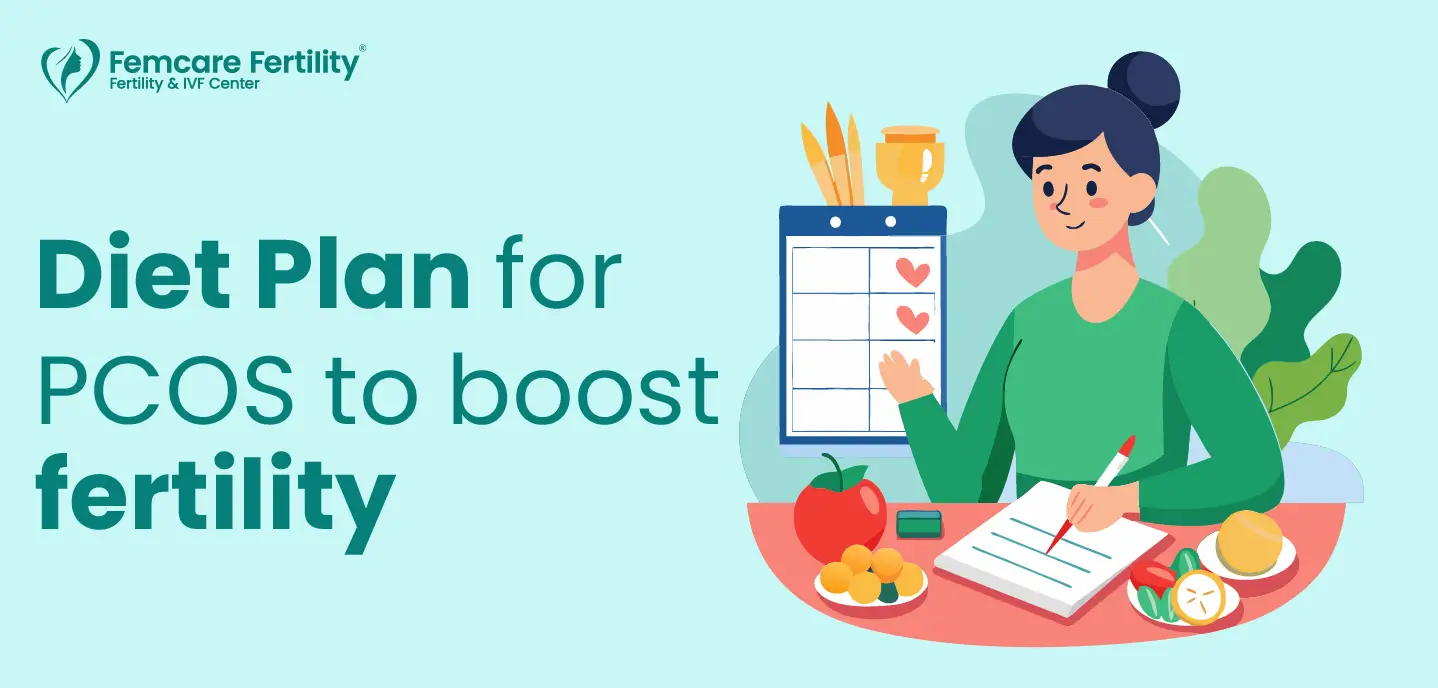
But here’s the hopeful truth: the food you eat can change the game. A balanced PCOS fertility diet is often the first step toward better cycles, weight management, and improved chances of pregnancy. This blog will walk you through the best diet for PCOS, foods to avoid, and how to naturally support your fertility.
To understand how PCOS and infertility are interlinked, read this blog: PCOS and Infertility
Can Diet Improve Fertility in Women with PCOS?
Yes, absolutely. Polycystic Ovary Syndrome (PCOS) affects hormone levels, ovulation, and metabolism. One of its key features is insulin resistance, which leads to higher insulin and androgen levels. This, in turn, disrupts ovulation and reduces fertility.
Research shows that women with PCOS who follow a targeted diet can improve ovulation and boost fertility. In fact, 25% of the women who achieved the desired 5% or more weight reduction conceived spontaneously. It shows how even modest weight loss can make a significant difference.
The focus should be on blood sugar control, weight balance, and reducing inflammation, all of which help regulate hormones and restore menstrual cycles.
What Is the Best Diet for PCOS?
When managing PCOS, the right diet can do more than just help with weight. It can regulate hormones, improve ovulation, reduce inflammation and even boost your chances of conception. Moreover, there’s no single “PCOS diet” that works for everyone. Instead, there are a few evidence-based dietary patterns that target the core issues of PCOS, such as insulin resistance, chronic inflammation and hormonal imbalance.
Diet Plan:
| Diet Type | How It Supports PCOS | Key Foods to Include | Best For Women Who |
| Low Glycemic Index (GI) Diet | – Stabilises blood sugar – Reduces insulin spikes -Minimises cravings and fat storage |
– Brown rice, quinoa – Whole wheat roti, oats – Lentils, chickpeas, beans -Apples, pears, sweet potato – Barley, millets |
-Struggle with weight gain or sugar cravings -Have insulin resistance or prediabetes -Need help managing appetite |
| Anti-Inflammatory Diet | -Reduces internal inflammation -Supports healthy ovulation – Improves egg quality |
-Salmon, sardines (omega-3s) – Berries, pomegranate -Leafy greens (spinach, kale) – Olive oil, turmeric – Green tea, walnuts |
-Experience irregular or painful periods -Have skin issues or fatigue -Want to support natural ovulation |
| Mediterranean Diet | -Improves hormonal balance -Supports heart health -Maintains stable weight |
– Olive oil, tomatoes, cucumbers – Grilled fish, chicken – Whole grains (brown rice, quinoa) – Legumes, nuts, seeds -Fresh fruits and vegetables |
-Want a balanced and flexible plan -Prefer fresh, homemade meals -Are looking for long-term sustainability |
| Plant-Forward Diet | – Supports gut health – Reduces androgens -Encourages healthy weight loss |
-Tofu, paneer, lentils, beans -Whole fruits (banana, orange, berries) – Oats, chia, flax seeds – Soy milk, almond milk -Steamed vegetables, sprouts |
-Prefer vegetarian or vegan food -Have high testosterone levels -Want to improve gut and hormonal health |
| DASH Diet | – Lowers blood pressure -Improves insulin sensitivity -Supports metabolic health |
– Low-fat dairy (curd, milk) – Leafy greens, beetroot – Fruits (banana, apple, melon) – Lean meats or legumes -Unsalted nuts, whole grains |
-Have high BP or cholesterol -Have PCOS with metabolic syndrome -Need a heart-healthy option |
Each of these diets can be customised to fit Indian food habits as well. For example, replacing white rice with millets, using ghee or olive oil instead of margarine, or switching from sugary tea to herbal infusions can go a long way.
Pro Tip: Don’t chase the perfect diet. Instead, focus on consistency, balance, and nutrient quality. Even small, sustainable changes in what you eat can transform your hormonal health over time.
What Are the Best Foods to Eat in PCOS for Fertility?
For women with PCOS, eating the right foods can directly impact hormone regulation, ovulation, egg quality, and fertility. These PCOS fertility-friendly foods work by balancing insulin, reducing inflammation, and supporting healthy weight loss, all required for restoring menstrual regularity and boosting your chances of conception.
1. High-Fiber Foods
Fiber slows down digestion, prevents blood sugar spikes, and helps remove excess estrogen from the body. It also supports a healthy gut microbiome, key to hormone regulation.
Add these to your daily plate:
- Cruciferous vegetables: Broccoli, cauliflower, cabbage, Brussels sprouts
- Leafy greens: Spinach, fenugreek leaves (methi), kale, red-leaf lettuce
- Legumes: Chickpeas, lentils, rajma, black beans
- Whole grains: Barley, oats, daliya (broken wheat), millet (ragi, bajra)
- Fruits: Apples, pears, guava with skin (for extra fiber)
Tip: Aim for at least 25–30 grams of fiber daily to help improve insulin resistance.
2. Lean Protein
Protein keeps you full longer, curbs cravings, and prevents sudden spikes in blood sugar. It also helps repair tissues and supports the production of fertility hormones.
Excellent protein sources include:
- Eggs: Boiled, scrambled, or poached
- Poultry: Skinless chicken, turkey breast
- Seafood: Salmon, sardines, mackerel (rich in omega-3)
- Vegetarian options: Paneer, tofu, soya chunks, Greek yoghurt
- Legume pairings: Rajma-chawal, chana-dal with brown rice
Combine protein with fiber at every meal to stay energised and keep insulin stable.
3. Healthy Fats
Good fats are vital for hormone production, reducing inflammation, and improving egg quality. They help your body absorb fat-soluble vitamins like A, D, E, and K. Include these in moderation:
- Avocados: A natural source of monounsaturated fats
- Olive oil: Great for cooking or drizzling over salads
- Nuts and seeds: Flaxseed, chia, almonds, walnuts, pumpkin seeds
- Omega-3 fatty fish: Sardines, salmon, rohu (Indian carp), or fish oil supplements
Flaxseeds and chia seeds may help reduce testosterone levels in PCOS due to their phytoestrogen content.
4. Antioxidant-Rich Fruits
Oxidative stress contributes to poor egg health. Antioxidants neutralise free radicals, protect cells, and improve ovarian function.
Top fertility-boosting fruits:
- Berries: Blueberries, strawberries, Indian gooseberry (amla)
- Citrus fruits: Oranges, mosambi, lemon (rich in vitamin C)
- Pomegranate: Supports uterine lining and blood flow
- Kiwi and guava: Great for vitamin C and fiber
Eat fruits whole instead of juiced to retain fiber and reduce sugar load.
5. Whole Grains
Whole grains break down slowly in the body, offering sustained energy and reducing insulin spikes, which is critical for hormonal balance.
Nutritious whole grains to include:
- Brown rice, quinoa, and millets (bajra, jowar, ragi)
- Whole wheat roti or multigrain chapatis
- Steel-cut oats, daliya, and amaranth (rajgira)
- Barley (jau)—great for cooling inflammation
Replace white rice or maida-based foods with these for better hormone control.
What Foods Should You Avoid in PCOS?
If you’re managing PCOS, what you avoid is just as important as what you eat. Certain foods can worsen insulin resistance, raise inflammation, and elevate androgen levels, all of which disrupt ovulation and hormonal balance.
Below is a breakdown of the most problematic foods to avoid in PCOD and why they harm your health and fertility.
| Food Group | Why It’s Harmful | Examples to Watch Out For |
| Refined Carbohydrates | – Spike blood sugar – Increase insulin resistance – Fuel fat storage and hunger |
– White bread, white rice – Noodles, maida paratha – Pizza base, burger buns |
| Sugary Snacks & Beverages | – Promote weight gain – Worsen inflammation – Disrupt hormone levels |
– Packaged juices, soda – Candy, chocolates, milkshakes – Gulab jamun, barfi, pastries |
| Processed & Junk Foods | – Contain harmful fats and additives – Interfere with ovulation – Trigger acne and bloating |
– Instant noodles, frozen fries – Potato chips, corn puffs – Bakery items, biscuits |
| Red & Processed Meats | – Linked to poor egg health – May raise estrogen/testosterone imbalance – Inflammatory in excess |
– Bacon, sausages, ham – Salami, pepperoni – Red meat cooked in oil |
| Trans Fats & Hydrogenated Oils | – Raise bad cholesterol – Damage ovaries – Increase oxidative stress |
– Margarine, vanaspati – Fried snacks (samosa, pakora) – Bakery items with shortening |
What Is an Ideal Daily Meal Plan for PCOS Fertility?
Here’s a sample PCOS weight loss diet plan that also supports fertility. Feel free to tweak portions based on your age, weight, and activity level.
| Meal Time | What to Eat | Why It Helps |
| Early Morning (7:00–7:30 AM) | – 1 glass warm water with lemon + 1 tsp soaked methi (fenugreek) seeds – Optional: 5 tulsi leaves |
– Supports liver detox and hormone balance – Methi helps reduce insulin resistance |
| Breakfast (8:30–9:00 AM) | – Option 1: 2 boiled eggs + 1 multigrain roti + bowl of papaya – Option 2 (Veg): Moong chilla (2 small) with mint chutney + 1 guava – Herbal tea (like spearmint or cinnamon) |
– Combines protein, fiber, and antioxidants – Moong is gut-friendly and low GI – Papaya supports digestion and egg quality |
| Mid-Morning Snack (11:00 AM) | – Handful (8–10) soaked almonds OR walnuts – 1 cup green tea or jeera water |
– Healthy fats for hormone production – Green tea reduces inflammation and bloating |
| Lunch (1:00–1:30 PM) | – 1 bowl brown rice or millet khichdi (like bajra/moong dal) – 1 katori palak or methi sabzi – Cucumber-carrot-beet salad with lemon – Optional: Small bowl of plain curd |
– High-fiber grains and leafy greens support estrogen balance – Fermented curd improves gut health, which affects fertility hormones |
| Evening Snack (4:30–5:00 PM) | – 1 bowl roasted makhana or roasted black chana – 1 cup buttermilk with roasted jeera + pudina |
– Keeps insulin stable between meals – Buttermilk soothes digestion and provides probiotics |
| Dinner (7:00–7:30 PM) | – Option 1: Grilled paneer or tofu tikka + sautéed broccoli/carrot/beans + 1 jowar roti – Option 2: Besan cheela + vegetable soup – Optional: 1 tsp flaxseed powder in warm water after a meal |
– Low-carb and rich in protein and fiber – Flaxseeds help reduce testosterone levels |
| Bedtime (9:30–10:00 PM) | – 1 cup warm haldi doodh (turmeric milk – low-fat dairy or almond milk) – Add a pinch of nutmeg or cinnamon |
– Supports deep sleep and reduces inflammation – Cinnamon stabilizes insulin levels overnight |
This diet helps regulate insulin, supports ovulation, and includes food for irregular periods, like leafy greens and protein.
How Does Diet Help With Hormonal Imbalance in PCOS?
PCOS is essentially a hormonal condition, and diet plays a direct role in hormone regulation. A well-planned diet for hormonal imbalance can:
- Lower insulin levels
- Reduce testosterone
- Support healthy estrogen-progesterone balance
- Encourage regular periods
- Improve egg quality
Eating more anti-inflammatory foods and healthy fats helps lower chronic low-grade inflammation, which is common in PCOS and linked to fertility problems.
Can You Regulate Periods Through Food?
Yes. Adding food for regular periods, like iron-rich greens, omega-3s, and magnesium-containing nuts, can make a difference.
For example:
- Spinach and kale help with estrogen balance.
- Pumpkin seeds support progesterone production.
- Berries and citrus fruits reduce oxidative stress.
- Flaxseeds regulate estrogen via phytoestrogens.
Pairing these with movement and sleep hygiene improves outcomes further.
Final Takeaway: Can Diet Help You Get Pregnant with PCOS?
Yes, and it’s backed by science. With the right PCOS fertility diet, you can manage insulin resistance, reduce inflammation, balance hormones, and improve ovulation, all naturally.
Even small steps like swapping white bread for millet or adding chia seeds to breakfast can make a real difference. And when combined with movement, stress reduction, and support from a healthcare provider, these changes can significantly increase your chances of conception.
At Femcare Fertility, we specialize in PCOS-related infertility. Our expert team provides personalized guidance, nutrition therapy, hormone tracking, and advanced reproductive treatments—all under one roof. Book a consultation today and let us help you reclaim your cycle, your health, and your dream of motherhood.
FAQs (Frequently Asked Questions)
Question: Can PCOS women get pregnant naturally with diet and lifestyle changes?
Answer: Yes. Many women with PCOS conceive naturally after following a structured fertility diet and lifestyle plan. Diet helps regulate hormones and insulin levels, improving ovulation. Combining this with exercise, stress reduction, and supplements can naturally support conception.
Question: How long does it take to see results from a PCOS diet plan?
Answer: Visible improvements often begin in 6–12 weeks, depending on consistency and individual health. You may notice more regular periods, reduced acne, or better energy. Ovulation usually improves with sustained weight loss and dietary discipline over time.
Question: What is the best breakfast for women with PCOS trying to conceive?
Answer: A balanced breakfast includes protein, fiber, and healthy fats. Examples: Moong chilla with chutney, boiled eggs with multigrain roti, or Greek yogurt with flaxseed and berries. Avoid sugary cereals and white bread to keep insulin levels steady.
Question: Are dairy products bad for PCOS and fertility?
Answer: Not necessarily. Low-fat and fermented dairy, like curd or paneer, can be included in moderation. However, if you have acne or insulin resistance, plant-based alternatives like almond or soy milk might be better. Choose organic or hormone-free sources when possible.
Question: Does weight loss really help with fertility in PCOS?
Answer: Yes. Losing even 5–10% of body weight can significantly improve hormonal balance, regulate menstrual cycles, and restore ovulation in women with PCOS. Weight loss reduces insulin and androgen levels, two key factors that often interfere with fertility.