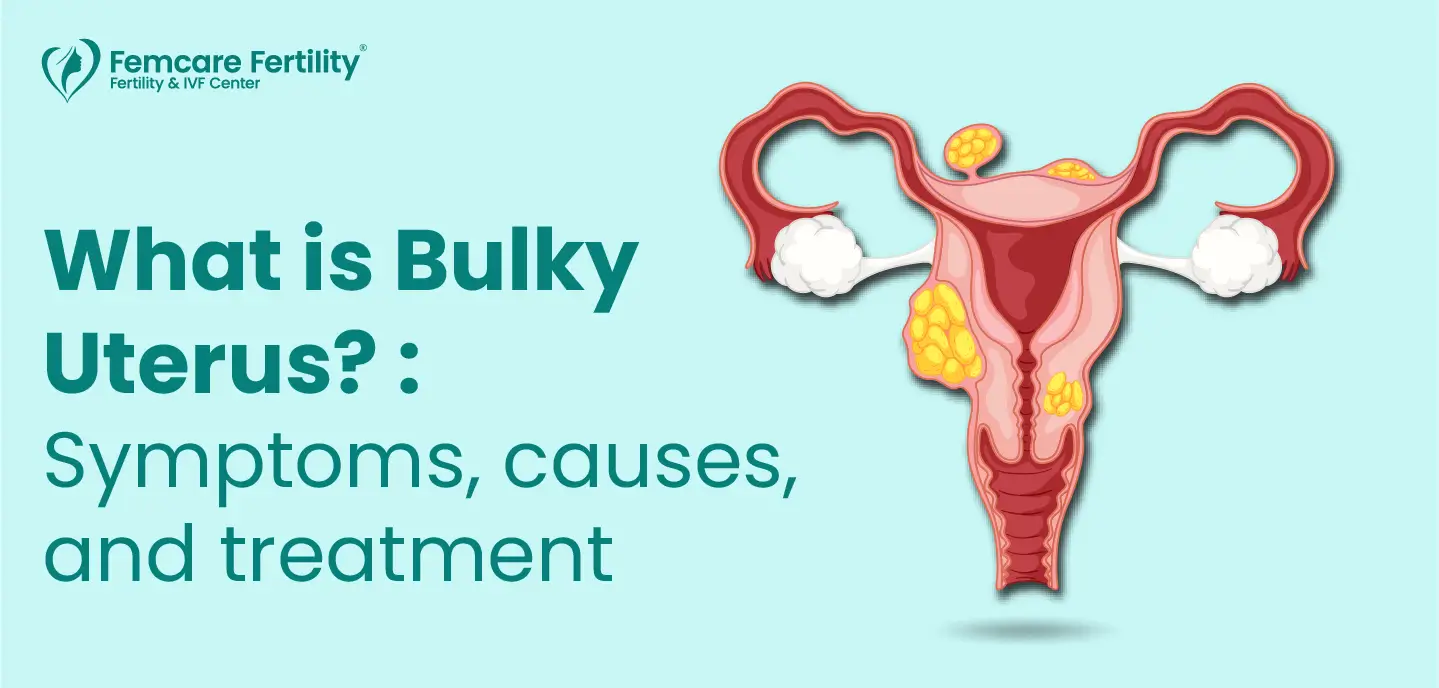
Bulky Uterus : Symptoms and causes
Have you ever noticed terms like ‘enlarged uterus size or bulky uterus’ in your USG report? If you have, it’s normal to look for clear answers. So, a bulky uterus means that the size of your uterus is larger than what is considered to be normal. But, if you’re not pregnant, how could this increase in size even be possible? In such cases, having it points to an underlying cause that needs close attention. That’s why this blog will share the symptoms, causes, and treatment options for this finding.
Bulky Uterus Meaning
A bulky uterus is not a disease or condition in itself. It is a descriptive term used when a woman’s uterus appears larger than its normal size. A normal uterus measures about 3 inches in length, 2 inches in width at its widest part, and around 1 inch in thickness. So, when the uterus exceeds these dimensions without pregnancy, doctors may describe it as bulky.
You will usually come across or hear this term in a pelvic ultrasound report, during a gynecological consultation, or while undergoing tests for menstrual or fertility-related problems. But how do you know whether the size of your uterus is actually a reason for concern? To understand that, let’s take a look at some common symptoms in the next section.
Bulky Uterus Symptoms
It’s symptoms vary depending on the underlying cause and can differ from person to person. In some cases, there may be no noticeable symptoms at all, and the finding is discovered incidentally during a pelvic scan, such as an ultrasound. When symptoms are present, the most common bulky uterus symptoms include:
- A feeling of bloating in the lower abdomen
- Heavy or unusual vaginal bleeding (even after menopause)
- Menstrual irregularities
- Pelvic pain or pressure
- Frequent urination or leakage of urine
- Painful intercourse
- Pelvic Inflammatory Disease
- Difficulty in conceiving
- Get tired easily
So, if you’re experiencing any of these symptoms, it’s best to reach out to a gynecologist for further investigation. A thorough examination will then help your doctor to reach the root cause of your problem.
Bulky Uterus Causes
1 in every 5 Indian women has a bulky uterus. Sounds too common, right? But not everyone tends to find the underlying cause of their condition. However, once your gynecologist knows it, they will help your uterus go back to its normal size. To break it down further, let’s discuss a few common causes of a bulky uterus:
- Adenomyosis is a condition that occurs when the inner lining of the uterus grows into the muscular wall. The thicker the lining, the bulkier your uterus will appear.
- Uterine fibroids are non-cancerous masses that tend to develop within your uterus. Based on their size or number, they add bulk to your uterus.
- Hormonal imbalance is one of the most common bulky uterus causes. Thus, an excessive amount of estrogen causes the uterus to increase in size.
- When the uterine lining becomes abnormally thick, this condition may be described as endometrial thickening or hyperplasia. This leads to swelling in the uterus.
But, don’t stress out! A bulky uterus is totally manageable once the underlying cause is identified. That’s why the next section will discuss its treatment and management options.
Bulky Uterus Management
If you’re planning a pregnancy or already undergoing IVF, you might be wondering if a bulky uterus could affect your fertility. The answer is, it really depends on the specific cause. That’s why your gynecologist may advise you to start the treatment, if required, before you try to conceive. Let’s help you understand the management options for a bulky uterus:
| Activity | What to expect | Impact on fertility/health |
| Monitoring | Regular ultrasounds to monitor the size and changes in your uterus, if symptoms are mild or absent | An ultrasound is a safe procedure for all women |
| Medications |
|
Such medications are safe when taken orally or via injection (to be advised only by a gynecologist) |
| Surgeries |
|
Myomectomy and adenomyosis procedures are invasive, keeping your fertility intact; hysterectomy is a major surgery and eliminates fertility |
| Lifestyle | Your gynecologist may advise the following:
|
Supports physical health and keeps the body ready for pregnancy |
Simple measures, regular follow-ups, and targeted treatment are enough to control symptoms and eliminate a bulky uterus before pregnancy or IVF.
Conclusion
A bulky uterus doesn’t mean that you can no longer get pregnant. In fact, in the majority of cases, there’s an underlying cause that needs to be identified and treated. So, not only women who are planning to conceive, but women of all ages should consult a gynecologist if they feel like their belly is protruding without a cause. At Femcare Fertility, we have the best fertility specialists who will address similar worries so you can become healthy and happy again! Reach out to us at www.femcarefertility.com for quick answers to your queries.
FAQs
Question: What is the reason for a bulky uterus?
Answer: A bulky uterus can be caused by fibroids (non-cancerous tumors), hormonal imbalance (high levels of estrogen thickening the uterine lining)‚ adenomyosis (excessive growth of the uterine lining tissue into the muscular wall), or pregnancy. A proper diagnosis of the underlying cause will help you select the most suitable treatment options.
Question: Can a bulky uterus affect fertility?
Answer: Yes, a bulky uterus can sometimes affect fertility, especially if you’ve been diagnosed with a cause like fibroids, adenomyosis, or hormonal imbalance. However, if you’re planning a pregnancy, it’s advised to consult the best fertility specialist near you, at Femcare Fertility, to treat these causes.